Comprehensive Buyer Guides
Expert guidance on evaluating color, cut, clarity, treatments, and authenticity for the world's most sought-after gemstones.
Comprehensive Buyer Guides
In-depth buying advice for priority gemstones.
- Diamond: Natural diamonds are carbon crystals formed in the earth. Laboratory-grown diamonds are produced in controlled environments and have properties corresponding to natural diamond. Simulants such as cubic zirconia and moissanite are different materials.
- Ruby: Ruby is the red variety of corundum. The boundary between ruby and pink, purple, or orange sapphire can depend on laboratory and market conventions.
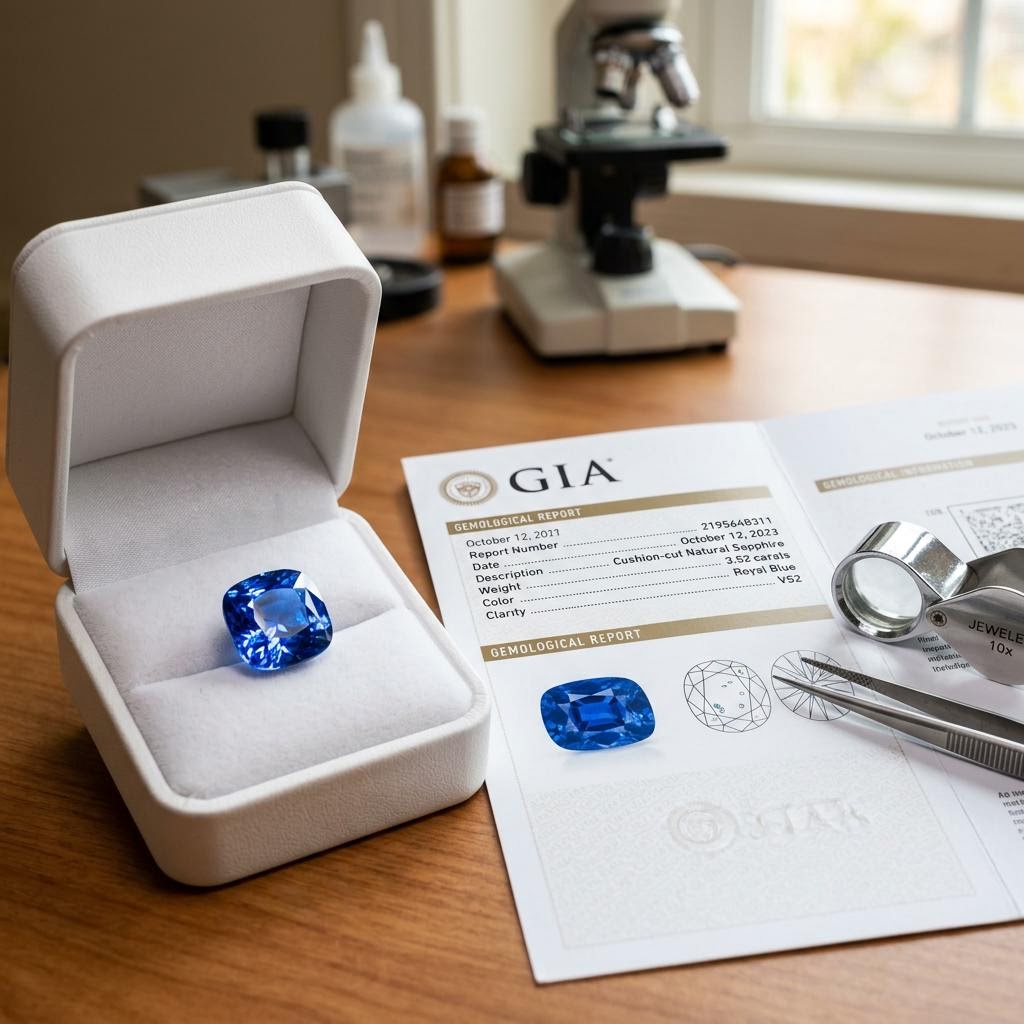
- Sapphire: Sapphire is corundum of any color except red (ruby). Blue is the classic hue, but sapphires naturally occur in pink, yellow, green, white, and the rare pink-orange 'Padparadscha'.
- Emerald: Emerald is the green-to-bluish-green variety of beryl. Its color is caused by chromium and/or vanadium. If the green is too pale, it is classified as green beryl, not emerald.
- Opal: Opal is a hydrated amorphous form of silica. Its internal structure diffracts light to create the flashes of color known as 'play-of-color'.
- Turquoise: Turquoise is a hydrated copper aluminum phosphate. It ranges from sky blue to green, often with matrix (remnants of host rock).
- Jade: Jade refers to two distinct minerals: Nephrite and Jadeite. Jadeite is generally harder, rarer, and comes in a wider range of vivid colors including 'Imperial' green. Nephrite is more abundant and incredibly tough.
- Pearl: Pearls are organic gems created by mollusks depositing layers of nacre. They can be natural (extremely rare) or cultured (human-assisted).
- Tanzanite: Tanzanite is the blue-to-violet gem variety of the mineral zoisite, found only in a small area of Tanzania.
- Aquamarine: Aquamarine is the blue to greenish-blue variety of the mineral beryl.
- Tourmaline: Tourmaline is a complex group of borosilicate minerals known for coming in every color of the spectrum. Notable varieties include Rubellite (red), Indicolite (blue), and Paraíba (neon blue-green).
- Topaz: Topaz is a fluorine aluminum silicate. Imperial Topaz (reddish-orange to pink) is a highly sought natural variety. Blue topaz is ubiquitous in the market.
- Zircon: Zircon is a natural zirconium silicate mineral and is different from cubic zirconia, a manufactured diamond simulant.