Cambodia
Produces blue and golden zircon, much of it from alluvial deposits.
Semi-Precious gemstone profile
Natural Fire From an Ancient Mineral
Zircon is a natural gemstone with high refractive index and strong dispersion, producing impressive fire in well-cut stones. It occurs in colorless, blue, golden, orange, red, and brown varieties.
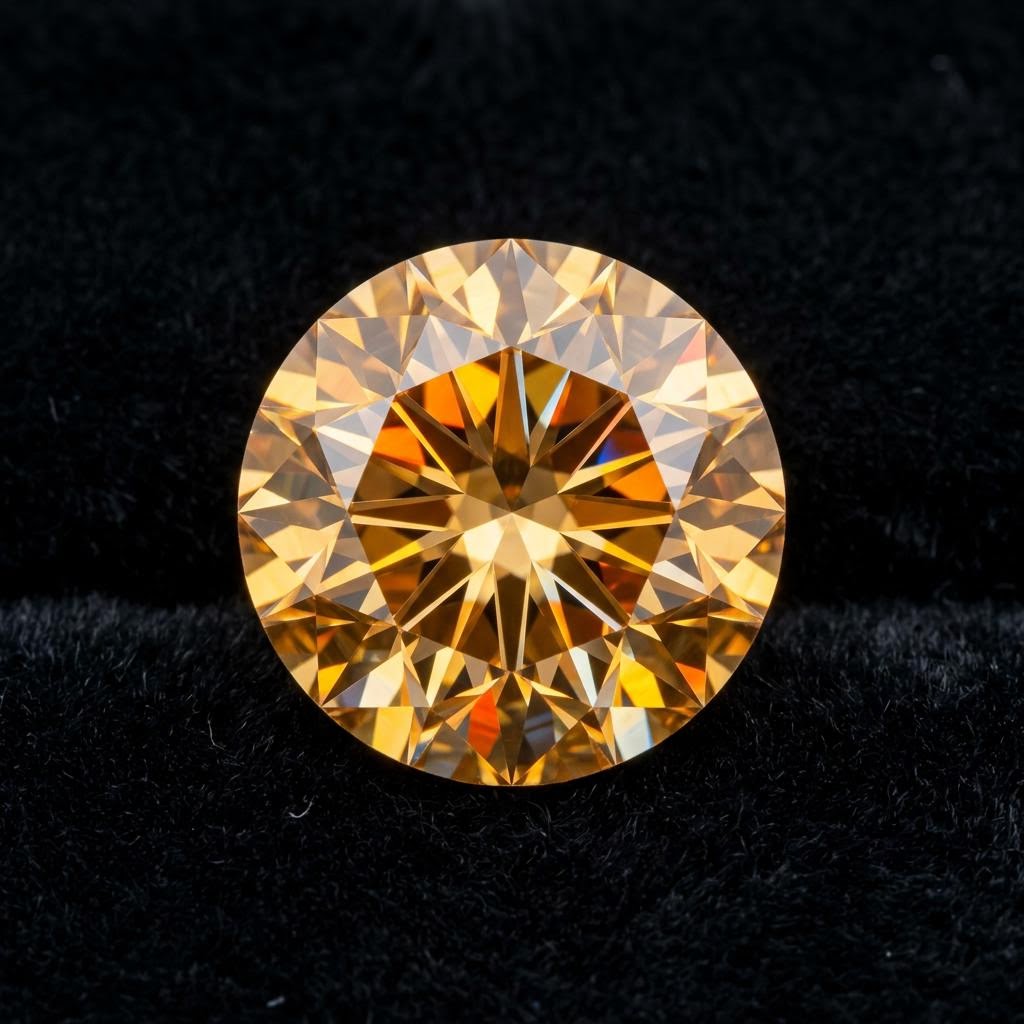
A practical field note on what Zircon is made of, how it forms, how light behaves inside it, and what professionals look for when identifying it.
Browse the plain-language gemstone glossary or learn how to read a lab report.
Representative source regions, not a map of every occurrence.
Produces blue and golden zircon, much of it from alluvial deposits.
Long-established source of many zircon colors.
Produces reddish, orange, and blue zircon.
Color is shaped by chemistry, structure, inclusions, and light. These are representative varieties—not a promise that every stone will show every shade.
Usually heat-treated from brown zircon; popular for its bright color and fire.
Natural golden zircon with high luster and dispersion.
Common natural bodycolor caused by radiation-related defects.
Warm reddish zircon, often prized by collectors.
High refractive index and dispersion can make colorless zircon resemble diamond.
Gemstones have rich symbolic histories. The claims below are presented as folklore, cultural tradition, or modern pseudoscience—not as proven medical, psychological, or supernatural effects.
Historical lens
Historical lapidaries gave many transparent and fiery stones protective roles.
Historical lens
These symbolic claims are not consequences of zirconium silicate's measurable properties.
Gemological properties can be measured and tested. Symbolic meaning is personal and cultural; crystals should never replace qualified medical or mental-health care.
Zircon crystals are among the oldest dated minerals on Earth. Blue zircon became a popular jewelry stone in the nineteenth century, while natural reddish and golden varieties have much older trade histories.
Zircon has been used in historical amulets and is associated in modern spiritual traditions with grounding, clarity, and protection. These associations are cultural or spiritual traditions, not scientifically demonstrated effects.
Cultural meanings and historical beliefs are included for context. They are not scientific evidence or medical advice.
Folklore and modern spiritual practices attach symbolic meanings to Zircon. Those beliefs are presented as cultural history, not as medical guidance or evidence of physical effects.
This section records cultural history and folklore. These stories are not scientific evidence or medical guidance.
Do not confuse natural zircon with cubic zirconia, a laboratory-made diamond simulant. Check for facet wear and heat treatment disclosure; zircon can be brittle and should be protected from hard knocks.
Identity: Zircon is a natural zirconium silicate mineral and is different from cubic zirconia, a manufactured diamond simulant.
Color, Clarity & Cut: Zircon has extremely high dispersion (fire) and a high refractive index, giving it brilliance rivaling diamond. Blue is the most popular color, followed by earthy reds, oranges, and greens.
Treatments: Most blue and colorless zircons are produced by heat-treating brown/reddish rough in reducing conditions. Look-alikes include diamond (for colorless zircon) and aquamarine or blue topaz (for blue zircon).
Care & Wear: Moderate hardness (Mohs 6.5-7.5), but brittle. Zircon facet edges easily abrade and chip with daily wear. Best for pendants, earrings, or occasional-use rings. Avoid ultrasonic cleaners.
Report Considerations: Lab reports confirm natural origin and distinguish it from synthetic simulants. They can also determine if the zircon is 'high' or 'low' type (related to radioactive decay of trace elements over geological time).
Browse our current, authentic collection of natural zircons on eBay.