Tanzania · Merelani Hills
The only known commercial source; the deposit is geologically localized.
Semi-Precious gemstone profile
Found Only at the Foot of Kilimanjaro
A blue/violet variety of zoisite found only in a small area near Mount Kilimanjaro in Tanzania. Famous for extreme trichroism.
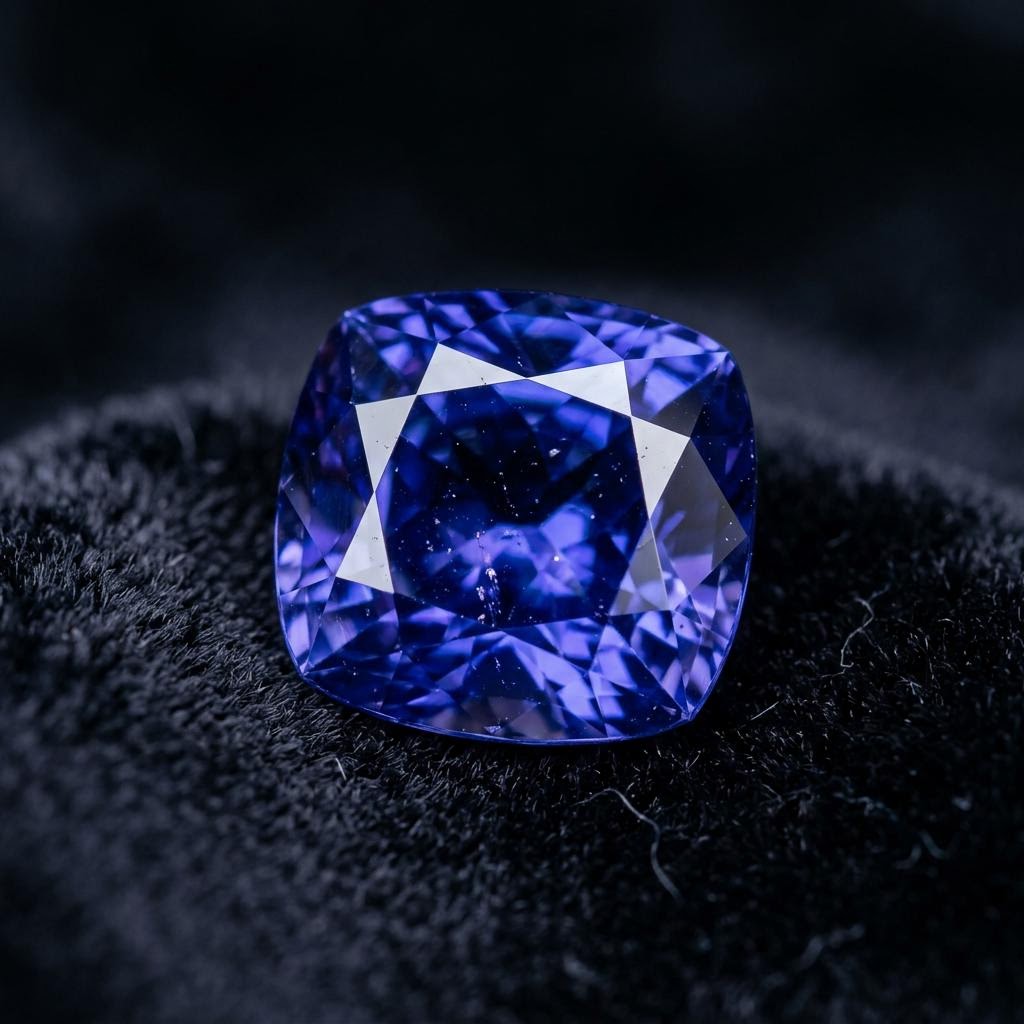
A practical field note on what Tanzanite is made of, how it forms, how light behaves inside it, and what professionals look for when identifying it.
Browse the plain-language gemstone glossary or learn how to read a lab report.
Representative source regions, not a map of every occurrence.
The only known commercial source; the deposit is geologically localized.
Color is shaped by chemistry, structure, inclusions, and light. These are representative varieties—not a promise that every stone will show every shade.
Highly prized blend of blue and violet, often visible in well-cut stones.
Strong blue face-up color, especially in larger heated stones.
Dark blue-violet tone that can show strong pleochroism.
Lighter violet appearance, often more affordable.
Unheated or differently oriented material can retain green or brown components.
Gemstones have rich symbolic histories. The claims below are presented as folklore, cultural tradition, or modern pseudoscience—not as proven medical, psychological, or supernatural effects.
Historical lens
This is a modern narrative built around rarity, novelty, and its dramatic color change by orientation.
Historical lens
The association is symbolic and is not a demonstrated effect of vanadium-bearing zoisite.
Gemological properties can be measured and tested. Symbolic meaning is personal and cultural; crystals should never replace qualified medical or mental-health care.
Discovered by a Maasai shepherd, Ali Juuyawatu, who found blue crystals on the ground after a bush fire in the Merelani Hills.
Tiffany & Co. quickly recognized the gem's potential, named it 'Tanzanite', and launched a massive marketing campaign, making it the most celebrated new gemstone of the 20th century.
Tanzanite exists in only one 4km² zone on Earth. Geologists predict the mines will be completely exhausted within the next few decades, making it a true 'one-generation' gemstone.
Because of its recent discovery, tanzanite doesn't have thousands of years of cultural lore. However, it quickly became a symbol of new beginnings and modern elegance. In 2002, the American Gem Trade Association added tanzanite to the official birthstone list for December—the first change to the list since 1912.
Cultural meanings and historical beliefs are included for context. They are not scientific evidence or medical advice.
The Maasai people of Tanzania consider blue a sacred, spiritual color representing life and prosperity. They traditionally gift blue beads to women who have just given birth. Today, tanzanite stones are given as a blessing for new babies.
This section records cultural history and folklore. These stories are not scientific evidence or medical guidance.
Color depth dictates value. The finest tanzanites are deep, vivid 'sapphire' blue with a hint of violet. Paler stones are much less expensive. Tanzanite is strongly pleochroic (showing different colors from different angles); cutters balance weight retention against achieving the best face-up blue color. Almost all tanzanite is gently heated to remove brown/yellow tones; this is standard and stable. Tanzanite is relatively soft (6.5), so it is best suited for pendants, earrings, or rings worn occasionally rather than daily.
Identity: Tanzanite is the blue-to-violet gem variety of the mineral zoisite, found only in a small area of Tanzania.
Color, Clarity & Cut: Deep, saturated violet-blue is highly sought after. Due to strong pleochroism, cutters must orient the stone carefully to balance blue and violet. Usually eye-clean.
Treatments: Heating is encountered in tanzanite and may alter brownish or yellowish components toward blue-violet. Glass and other materials can imitate its appearance.
Care & Wear: Moderate hardness (Mohs 6-7) but has perfect cleavage, making it susceptible to chipping or breaking if struck. Never use ultrasonic or steam cleaners. Avoid sudden temperature changes (thermal shock).
Report Considerations: Lab reports verify the identity and can confirm if the stone is untreated (rare). Note that heat treatment in tanzanite is often undetectable.
Browse our current, authentic collection of natural tanzanites on eBay.