Brazil
Produces nearly every major tourmaline color, including Paraíba material.
Semi-Precious gemstone profile
The Rainbow Gem With No Duplicate
A crystalline boron silicate mineral compounded with elements like aluminium, iron, magnesium. Features one of the widest color ranges of any gem species.
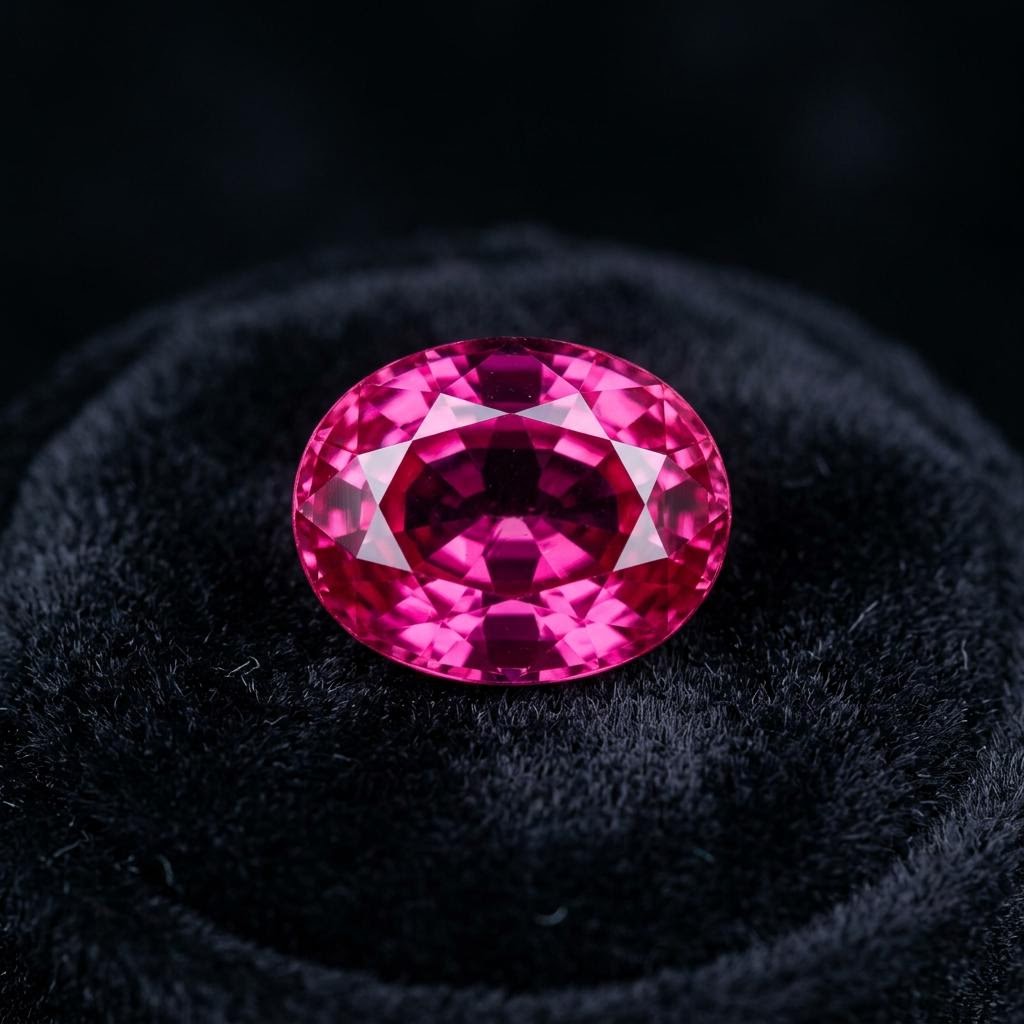
A practical field note on what Tourmaline is made of, how it forms, how light behaves inside it, and what professionals look for when identifying it.
Browse the plain-language gemstone glossary or learn how to read a lab report.
Representative source regions, not a map of every occurrence.
Produces nearly every major tourmaline color, including Paraíba material.
Known for bright copper-bearing blue-green tourmaline.
Produces pink, green, and bi-color pegmatite tourmaline.
Important source of vivid red and green tourmaline.
California and Maine are historic sources of colorful crystals.
Color is shaped by chemistry, structure, inclusions, and light. These are representative varieties—not a promise that every stone will show every shade.
Pink-red to red tourmaline, often with rich saturation.
Blue to blue-green elbaite, usually colored by iron and copper.
Green tourmaline ranging from mint to deep forest tones.
Copper-bearing electric blue-green material; the name is used carefully in trade.
Concentric or lengthwise green-and-pink zoning in one crystal.
Opaque black tourmaline, the most common tourmaline species.
Gemstones have rich symbolic histories. The claims below are presented as folklore, cultural tradition, or modern pseudoscience—not as proven medical, psychological, or supernatural effects.
Historical lens
Unlike many gemstone legends, this story connects to a real, measurable physical property.
Historical lens
The story reflects the mineral family's unusually broad natural color range.
Historical lens
Its small charge under heat or pressure is real, but it does not demonstrate those protective health effects.
Gemological properties can be measured and tested. Symbolic meaning is personal and cultural; crystals should never replace qualified medical or mental-health care.
The Dutch East India Company brought tourmaline from Sri Lanka to Europe in the 1700s to satisfy demand for curiosities and gems.
China's last empress, Dowager Cixi, was so obsessed with pink tourmaline that she bought almost the entire production of the newly discovered mines in Southern California in the early 1900s.
A neon blue-green variety containing copper was discovered in Paraíba, Brazil. It possesses an internal 'electric' glow. Paraíba tourmaline is now one of the most expensive and sought-after gems in the world, often surpassing diamonds in price per carat.
Because tourmaline comes in so many colors, ancient mystics believed it traveled along a rainbow from the center of the earth, gathering all its colors along the way. It is the modern birthstone for October, favored by those who want a durable, colorful alternative to opal.
Cultural meanings and historical beliefs are included for context. They are not scientific evidence or medical advice.
In ancient Egypt, tourmaline was used as a talisman to protect against bad decisions. Alchemists revered tourmaline for its pyroelectric properties—when heated, it develops an electrical charge that attracts dust and ashes (the Dutch called it 'aschentrekker' or ash-puller).
This section records cultural history and folklore. These stories are not scientific evidence or medical guidance.
Tourmaline varieties are priced radically differently. Paraíba tourmaline (copper-bearing neon blue/green) commands astronomical prices. Rubellite (deep red/pink) and Chrome Tourmaline (intense green) are highly valued. Bi-color and 'Watermelon' tourmalines (pink center, green rind) are prized by collectors. Look for good clarity in green and blue stones, though red/pink rubellite is often expected to have some inclusions.
Identity: Tourmaline is a complex group of borosilicate minerals known for coming in every color of the spectrum. Notable varieties include Rubellite (red), Indicolite (blue), and Paraíba (neon blue-green).
Color, Clarity & Cut: Color saturation and hue dictate evaluation. Paraíba tourmaline (colored by copper) is exceptionally rare. Many tourmalines are strongly pleochroic. Bi-color and 'watermelon' tourmalines are also popular.
Treatments: Heat treatment and irradiation are common to lighten or alter color. Fracture filling is occasionally used in heavily included stones like rubellite. Look-alikes depend on the color (e.g., emerald for chrome tourmaline, amethyst for purple tourmaline).
Care & Wear: Good hardness (Mohs 7-7.5), but some stones can be brittle, especially if heavily included. Avoid ultrasonic and steam cleaners due to the risk of expanding liquid inclusions or thermal shock.
Report Considerations: For Paraíba tourmaline, an independent lab report is highly advisable to verify copper content and origin. For other tourmalines, reports help identify irradiation, heat, or clarity enhancement.
Browse our current, authentic collection of natural tourmalines on eBay.