Sri Lanka
Produces blue, fancy-color, and padparadscha sapphires.
Precious Gems gemstone profile
The Gem of Wisdom, Loyalty & Heaven
Also a variety of corundum, coming in every color except red. The classic deep blue variants from Kashmir, Ceylon, and Montana are highly prized.
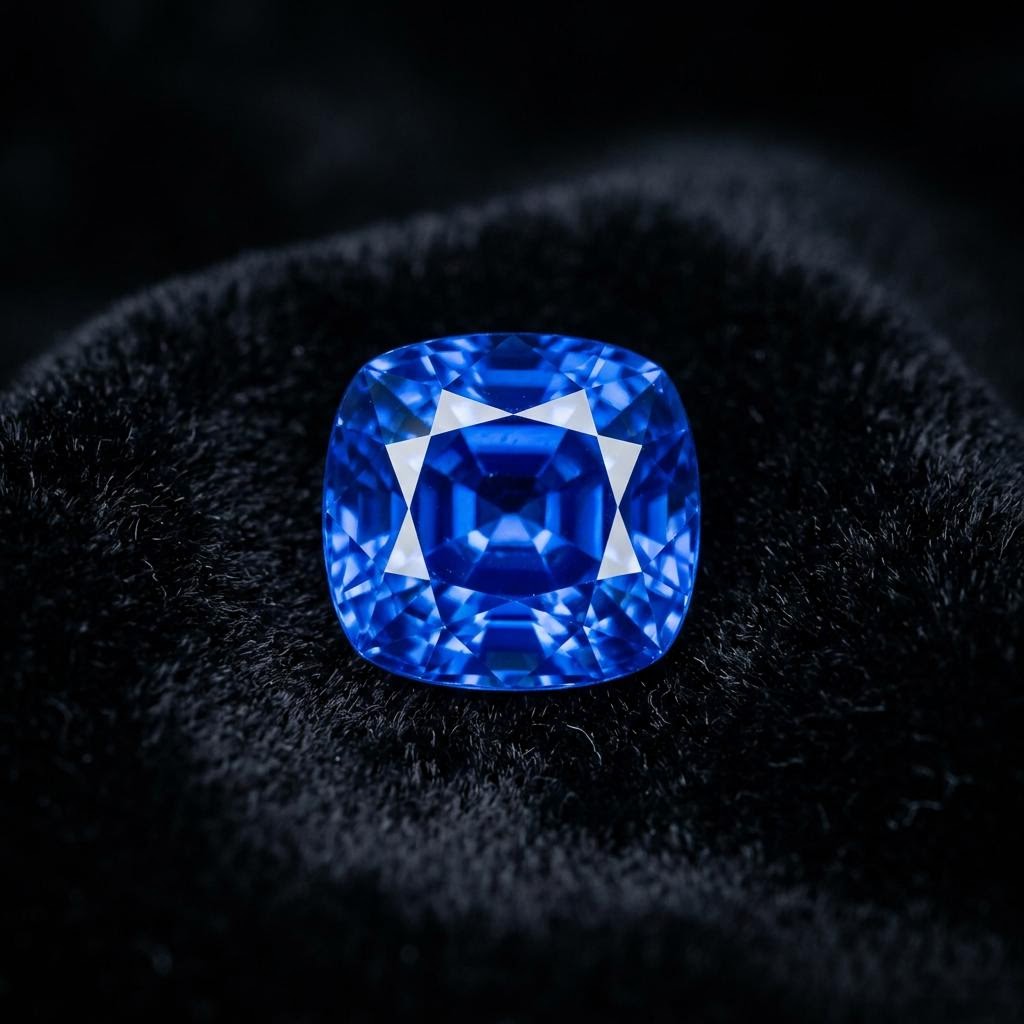
A practical field note on what Sapphire is made of, how it forms, how light behaves inside it, and what professionals look for when identifying it.
Browse the plain-language gemstone glossary or learn how to read a lab report.
Representative source regions, not a map of every occurrence.
Produces blue, fancy-color, and padparadscha sapphires.
Mogok and nearby areas are known for intense blue stones.
Historic source of famously velvety blue material.
A modern source with a broad range of colors and geologies.
Often produces darker blue to greenish-blue sapphires.
Color is shaped by chemistry, structure, inclusions, and light. These are representative varieties—not a promise that every stone will show every shade.
A saturated blue trade term; quality still depends on tone, saturation, clarity, and origin.
Medium blue with a soft violet cast, historically associated with Kashmir.
Rare pink-orange to orange-pink sapphire; the name is tightly protected in trade.
Chromium can create pink; the ruby boundary depends on hue and local standards.
Iron-related absorption often contributes to yellow and golden tones.
Mixed iron and color centers can produce green sapphires.
Sapphire without strong chromophore absorption can be nearly colorless.
Gemstones have rich symbolic histories. The claims below are presented as folklore, cultural tradition, or modern pseudoscience—not as proven medical, psychological, or supernatural effects.
Historical lens
Royal and religious traditions across Europe, South Asia, and the Middle East used the stone as a symbol of authority.
Historical lens
Astrological correspondences are cultural frameworks, not measurable mineral properties.
Historical lens
No clinical evidence shows sapphire changes mood, health, or cognition through contact.
Gemological properties can be measured and tested. Symbolic meaning is personal and cultural; crystals should never replace qualified medical or mental-health care.
The ancient Persians believed the earth rested on a giant sapphire whose reflection colored the sky blue. They called the stone "safir" (beloved of Saturn). Persian royal seals were engraved on sapphires.
The Catholic Church used sapphires extensively—the Archbishop of Canterbury's ring traditionally featured a sapphire. Clergy believed sapphires pointed the soul toward heaven. Pope Innocent III decreed that cardinal rings must be sapphire.
Sri Lanka (then Ceylon) has mined sapphires for 2,000+ years. The Star of India (563 ct star sapphire) came from Sri Lanka. Greek and Roman sailors wore sapphires as protection during voyages.
A landslide in the Himalayas exposed a sapphire deposit in Kashmir. The velvety "cornflower blue" Kashmir sapphires produced between 1881–1887 remain the benchmark for quality—most sell at auction for $20,000–$200,000+ per carat.
Napoleon gave Josephine a sapphire engagement ring. Prince Charles gave Princess Diana (now worn by Kate Middleton) an 18-carat Ceylon sapphire surrounded by diamonds—the most famous engagement ring in the world.
In ancient Greece and Rome, sapphires were worn by royalty and priests to ensure favor from the gods. Persian kings believed sapphires made them invincible rulers. In Buddhism, the blue sapphire was called the "gem of gems" for its ability to bring spiritual enlightenment. In Jewish tradition, the Ten Commandments were engraved on sapphire tablets. In medieval Europe, sapphires were associated with fidelity—an unfaithful wearer would cause the stone to change color.
Cultural meanings and historical beliefs are included for context. They are not scientific evidence or medical advice.
Ancient Greeks associated sapphires with Apollo and wore them to Delphi to receive favorable oracle readings. Medieval Europeans believed sapphires preserved chastity, revealed secrets of oracles, and could make peace between enemies. In the East, sapphires were believed to attract divine blessings and protect against envy, harm, and the evil eye.
This section records cultural history and folklore. These stories are not scientific evidence or medical guidance.
Kashmir sapphires are the gold standard—even small, included specimens command extraordinary premiums. Ceylon (Sri Lanka) sapphires are the most available premium option, prized for their bright, slightly violet-blue. Heat treatment is standard (90%+ of commercial sapphires); unheated stones with certification sell at 2–4× premium. For blue sapphires, look for vivid to strong saturation—avoid grayish or greenish overtones. Sapphires also come in every color except red (which become rubies): 'Padparadscha' sapphires (orange-pink) are especially valuable and rare. Star sapphires should display a sharp, centered 6-ray star. Always request GIA, AGL, or Gübelin certification for significant purchases.
Identity: Sapphire is corundum of any color except red (ruby). Blue is the classic hue, but sapphires naturally occur in pink, yellow, green, white, and the rare pink-orange 'Padparadscha'.
Color, Clarity & Cut: Compare hue, tone, saturation, zoning, extinction, windowing, clarity, cut, and size in the lighting where the stone will be worn.
Treatments: Heat and diffusion treatments may be encountered and require clear disclosure. Look-alikes include tanzanite, iolite, blue spinel, and blue topaz.
Care & Wear: Sapphire has high scratch resistance, but inclusions, treatments, settings, and prior repairs affect impact and cleaning safety. Avoid ultrasonic or steam cleaning when condition or treatment history is uncertain.
Report Considerations: For a significant purchase, an independent report may help identify the material and record detected treatments or an origin opinion when within scope. Origin does not itself establish quality, value, provenance, or ethics.
Browse our current, authentic collection of natural sapphires on eBay.