Brazil
Minas Gerais produces crystals from pale blue to intense blue.
Semi-Precious gemstone profile
The Crystal-Clear Gem of the Sea
A pale blue to light green variety of beryl. Named after seawater, it's famous for its flawless clarity and tranquil blue hues reminiscent of the ocean.
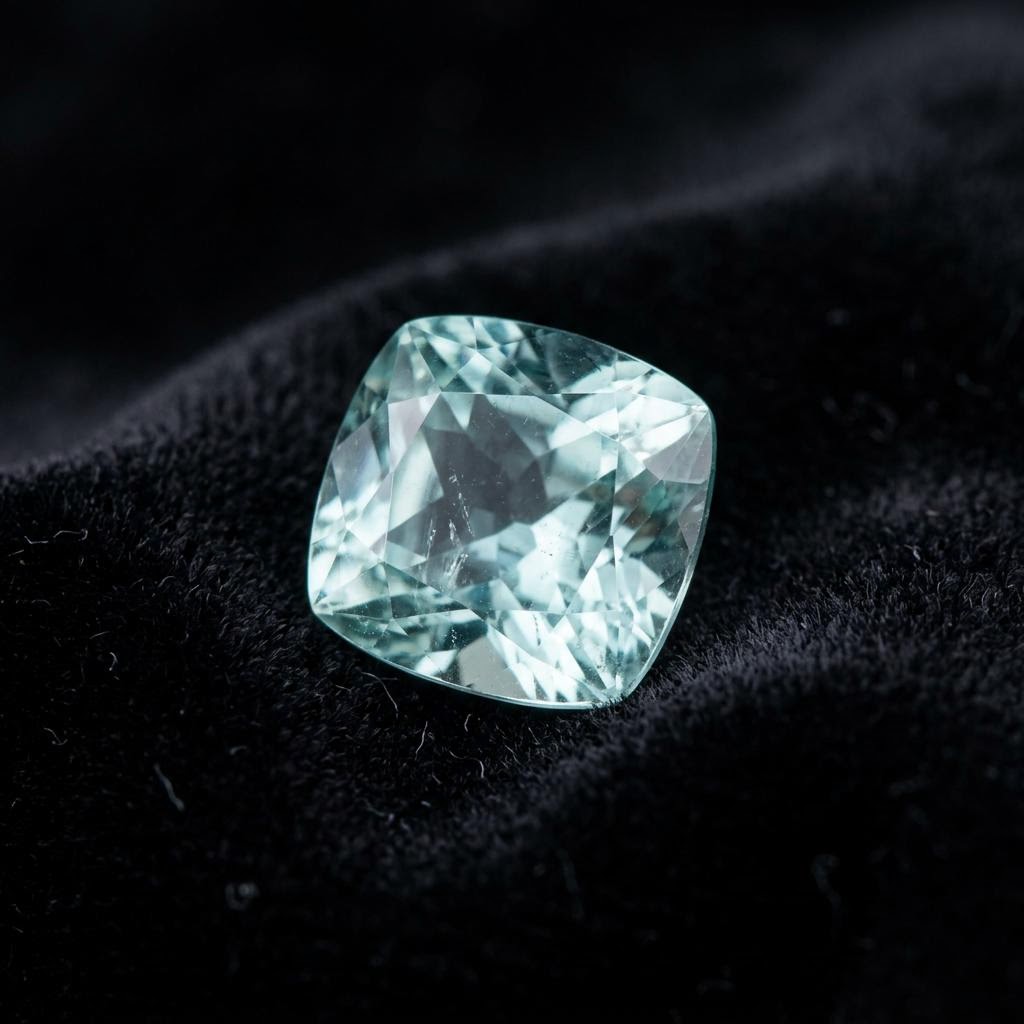
A practical field note on what Aquamarine is made of, how it forms, how light behaves inside it, and what professionals look for when identifying it.
Browse the plain-language gemstone glossary or learn how to read a lab report.
Representative source regions, not a map of every occurrence.
Minas Gerais produces crystals from pale blue to intense blue.
High-altitude pegmatites yield well-formed crystals.
Historic and modern pegmatite sources.
Produces blue and greenish-blue beryl.
Known for blue beryl from pegmatite fields.
Color is shaped by chemistry, structure, inclusions, and light. These are representative varieties—not a promise that every stone will show every shade.
Delicate icy blue, often valued for a clean, bright appearance.
Blue-green tones reflect iron-related absorption and pleochroism.
Classic medium-light blue associated with tranquil water.
A trade term for richly saturated deep blue aquamarine.
A warmer direction can appear in unheated or differently oriented material.
Gemstones have rich symbolic histories. The claims below are presented as folklore, cultural tradition, or modern pseudoscience—not as proven medical, psychological, or supernatural effects.
Historical lens
Its name comes from Latin for 'sea water,' linking color to maritime symbolism.
Historical lens
These meanings are cultural associations rather than measurable effects.
Historical lens
Aquamarine cannot treat speech, respiratory, emotional, or other health conditions.
Gemological properties can be measured and tested. Symbolic meaning is personal and cultural; crystals should never replace qualified medical or mental-health care.
Roman and Greek sailors carried aquamarine as a talisman to protect against shipwreck and ensure a safe, prosperous voyage. They believed it was the treasure of mermaids.
During the Victorian era, aquamarine became incredibly popular in delicate, romantic jewelry settings, often paired with pearls and seed diamonds.
The Dom Pedro, a 10,363-carat sculpted aquamarine (the world's largest faceted aquamarine), currently resides at the Smithsonian. Brazil's Santa Maria mine produces the most deeply saturated, valuable specimens.
Aquamarine is associated with tranquility, serenity, and harmony. It was traditionally given as a gift to a bride by her groom on the morning of their wedding to ensure a happy marriage. In medieval times, it was believed to reawaken the love of married couples.
Cultural meanings and historical beliefs are included for context. They are not scientific evidence or medical advice.
Romans believed that if you carved a frog into an aquamarine, it would reconcile enemies and make them friends. It was also considered sacred to Neptune/Poseidon, god of the sea.
This section records cultural history and folklore. These stories are not scientific evidence or medical guidance.
Deep, pure blue stones (often called Santa Maria color) are the most valuable. Most commercial aquamarine is heat-treated to remove green overtones and produce a purer blue; this treatment is permanent and accepted. Aquamarine should generally be eye-clean; inclusions significantly reduce value. Large, clean stones are readily available.
Identity: Aquamarine is the blue to greenish-blue variety of the mineral beryl.
Color, Clarity & Cut: Pure, intense blue is highly sought after ('Santa Maria' color). Clarity should be excellent (eye-clean). Large sizes are relatively common.
Treatments: Heating may be used to reduce greenish or yellowish components. Detectability depends on the material and available evidence. Look-alikes include blue topaz, light blue sapphire, and synthetic spinel.
Care & Wear: Aquamarine has good scratch resistance, but inclusions, fractures, settings, and prior repairs affect impact and cleaning safety. Seek professional confirmation before ultrasonic or steam cleaning.
Report Considerations: Lab reports confirm identity (distinguishing it from much cheaper blue topaz) and rule out synthetic beryl or rare treatments like coating.
Browse our current, authentic collection of natural aquamarines on eBay.