Minas Gerais, Brazil
Historic source of imperial topaz in orange, pink, and golden colors.
Semi-Precious gemstone profile
A Hard, Clear Gem With Many Natural Colors
Topaz is a transparent aluminum fluorine silicate found in colorless, yellow, pink, blue, and other hues. Its strong cleavage makes careful setting and handling important despite its high Mohs hardness.
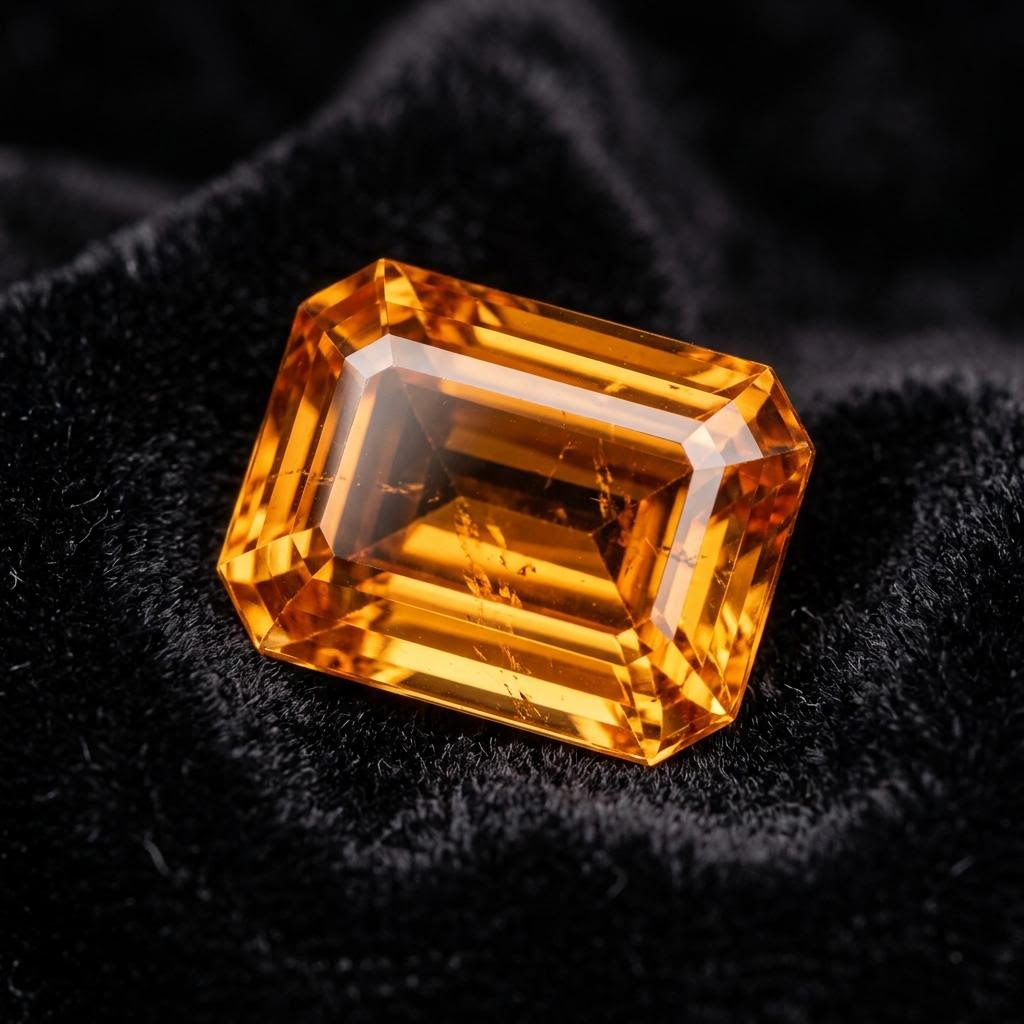
A practical field note on what Topaz is made of, how it forms, how light behaves inside it, and what professionals look for when identifying it.
Browse the plain-language gemstone glossary or learn how to read a lab report.
Representative source regions, not a map of every occurrence.
Historic source of imperial topaz in orange, pink, and golden colors.
Produces pale and pink topaz from granitic pegmatites.
A source of colorless, blue, and warm-toned crystals.
Color is shaped by chemistry, structure, inclusions, and light. These are representative varieties—not a promise that every stone will show every shade.
Warm orange to orange-pink topaz, especially associated with Brazilian material.
Usually treatment-enhanced blue produced from pale or colorless topaz.
Clear topaz shows strong luster and can resemble diamond or aquamarine when cut.
Natural pink is uncommon; some pink material is produced by coating or irradiation and heating.
Gemstones have rich symbolic histories. The claims below are presented as folklore, cultural tradition, or modern pseudoscience—not as proven medical, psychological, or supernatural effects.
Historical lens
Its golden colors and transparent brilliance inspired solar symbolism.
Historical lens
These are personal or spiritual interpretations, not measurable properties of fluoride-bearing topaz.
Gemological properties can be measured and tested. Symbolic meaning is personal and cultural; crystals should never replace qualified medical or mental-health care.
Topaz has been mined and worn since antiquity. The name was historically applied to several yellow stones, while modern gemology distinguishes topaz from similarly colored citrine and quartz.
Topaz has carried associations with warmth, friendship, clarity, and abundance in different cultural and spiritual traditions. These associations are cultural or spiritual traditions, not scientifically demonstrated effects.
Cultural meanings and historical beliefs are included for context. They are not scientific evidence or medical advice.
Folklore and modern spiritual practices attach symbolic meanings to Topaz. Those beliefs are presented as cultural history, not as medical guidance or evidence of physical effects.
This section records cultural history and folklore. These stories are not scientific evidence or medical guidance.
Confirm whether blue color is natural or treatment-enhanced; most commercial blue topaz is irradiated and heated. Protect the stone from hard blows along cleavage directions and ask for treatment disclosure.
Identity: Topaz is a fluorine aluminum silicate. Imperial Topaz (reddish-orange to pink) is a highly sought natural variety. Blue topaz is ubiquitous in the market.
Color, Clarity & Cut: Compare hue, tone, saturation, clarity, cut, size, and treatment evidence. Terms such as 'Imperial,' 'Swiss Blue,' and 'London Blue' need context and should not be treated as universal laboratory grades.
Treatments: Many blue topaz stones are irradiated and heated from colorless topaz. Imperial topaz is often heated to enhance pink/red tones. Look-alikes include aquamarine (for blue topaz) and citrine (for yellow topaz).
Care & Wear: High hardness (Mohs 8) but has perfect cleavage. A sharp blow can split the stone. Protect from hard impacts. Do not use ultrasonic or steam cleaners.
Report Considerations: A lab report is useful for verifying precious Imperial or natural pink topaz, and distinguishing yellow topaz from much cheaper citrine (often misleadingly sold as 'topaz').
Browse our current, authentic collection of natural topazs on eBay.