Gemstone Laboratory Reports
Learn what independent laboratory reports can tell you about a gemstone's identity, treatments, and reported characteristics.
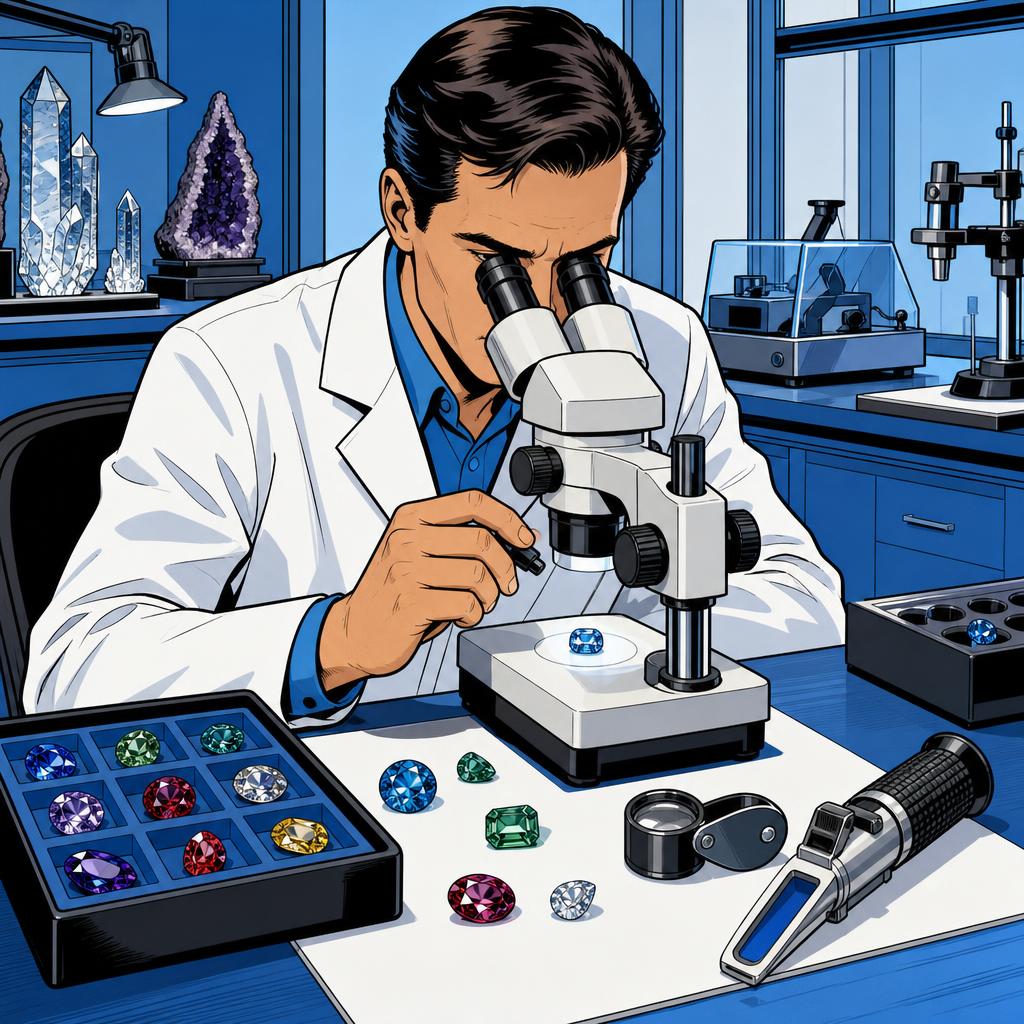
Identification, not appraisal
A laboratory report records a lab's findings and opinions using its methods and scope. It may describe detected treatments, but it may not establish every treatment, origin, quality factor, or value. It is not a guarantee of value and does not replace a monetary appraisal.
Lab-report checklist
Use the report, listing, and seller disclosures together before buying.
- Verify the report — Look up the report number on the laboratory's official website and confirm the digital record matches.
- Confirm the identity — Check that the species and variety match the gemstone described in the listing.
- Check natural or laboratory-grown origin — Make sure the report states whether the stone formed in nature or in a laboratory.
- Read every treatment disclosure — Note heating, clarity enhancement, fracture filling, or other treatments.
- Record measurements and weight — Compare carat weight and length × width × depth with the listing and setting.
- Match the report to the stone — Use measurements, weight, photos, and inscriptions to confirm it is the same stone.
Report Number & Verification
Every credible report has a unique identification number. Enter it on the laboratory's official website to verify the document and ensure the physical report matches the digital record.
Identification (Species & Variety)
This section states precisely what the material is. Species names the broader mineral family; variety identifies the specific color or type. For example, corundum is the species and sapphire is a variety.
Natural vs. Laboratory-Grown
The report should state whether the stone formed in nature or was manufactured. Natural stones formed through geological processes; laboratory-grown stones have the same chemical and physical properties as a natural stone but a different origin.
Treatments & Enhancements
Many gemstones are treated to improve color or clarity. Heating is widely accepted for sapphires and rubies when disclosed. Oils or resins can fill emerald fissures. Fracture-filled stones require special care and clear disclosure.
Geographic Origin
Some reports offer an opinion about the country where a stone was mined. Labs analyze inclusions and trace-element chemistry, but origin is an expert opinion rather than an absolute fact.
Measurements & Weight
Carat weight is the stone's mass; one carat equals exactly 0.2 grams. Dimensions are length × width × depth in millimeters and help match a stone to a setting.
Matching the Report to the Stone
Compare the report's carat weight and measurements with the listing, and use photographs, inscriptions, or identifying features to confirm the physical stone matches. Ask the seller to resolve discrepancies before purchasing.
Still have questions?
Browse the glossary for plain-language definitions of report terms.