Arizona, USA
Basalt-hosted peridot from San Carlos is commonly found as rounded nodules.
Semi-Precious gemstone profile
Olive-Green Olivine From the Mantle
Peridot is the gem-quality variety of olivine, recognized by its naturally yellowish green to olive color. Unlike many gems, its color comes mainly from iron in the crystal rather than trace impurities.
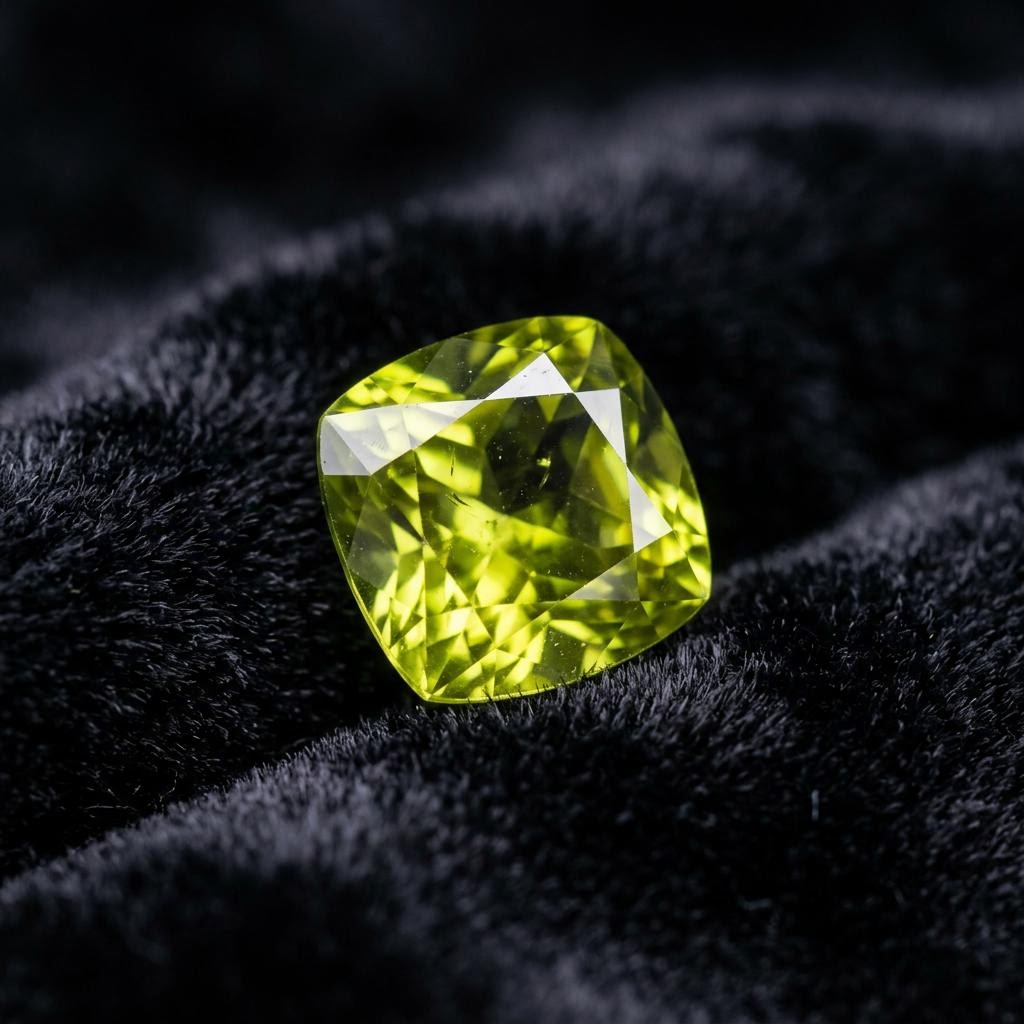
A practical field note on what Peridot is made of, how it forms, how light behaves inside it, and what professionals look for when identifying it.
Browse the plain-language gemstone glossary or learn how to read a lab report.
Representative source regions, not a map of every occurrence.
Basalt-hosted peridot from San Carlos is commonly found as rounded nodules.
High-altitude mountain deposits can yield larger, transparent crystals.
Historic Red Sea source, also known as St. John's Island.
Color is shaped by chemistry, structure, inclusions, and light. These are representative varieties—not a promise that every stone will show every shade.
Light yellow-green color caused primarily by iron in olivine.
The classic peridot tone, with yellow and green balanced at medium saturation.
Higher iron or darker tone can produce a deeper green appearance.
Gemstones have rich symbolic histories. The claims below are presented as folklore, cultural tradition, or modern pseudoscience—not as proven medical, psychological, or supernatural effects.
Historical lens
The association reflects its warm green glow and historic Zabargad source.
Historical lens
These are symbolic traditions, not effects demonstrated by olivine mineralogy.
Gemological properties can be measured and tested. Symbolic meaning is personal and cultural; crystals should never replace qualified medical or mental-health care.
Peridot was mined on the Egyptian island of Zabargad for more than two thousand years. Some historic emeralds in royal collections were later identified as peridot, including stones associated with Cleopatra.
Ancient and modern traditions have associated peridot with sunlight, renewal, prosperity, and protection from nighttime fears. These associations are cultural or spiritual traditions, not scientifically demonstrated effects.
Cultural meanings and historical beliefs are included for context. They are not scientific evidence or medical advice.
Folklore and modern spiritual practices attach symbolic meanings to Peridot. Those beliefs are presented as cultural history, not as medical guidance or evidence of physical effects.
This section records cultural history and folklore. These stories are not scientific evidence or medical guidance.
Look for a lively green bodycolor without excessive brown or yellow. Peridot can contain distinctive lily-pad inclusions and is sensitive to sharp impacts, so inspect edges and avoid ultrasonic cleaning for heavily included stones.
Browse our current, authentic collection of natural peridots on eBay.