India
Produces almandine and other garnet varieties.
Semi-Precious gemstone profile
Ancient Talisman of Travelers & Warriors
A group of silicate minerals that come in almost every color, though deep red is most common. Known for high refractive index and brilliance.
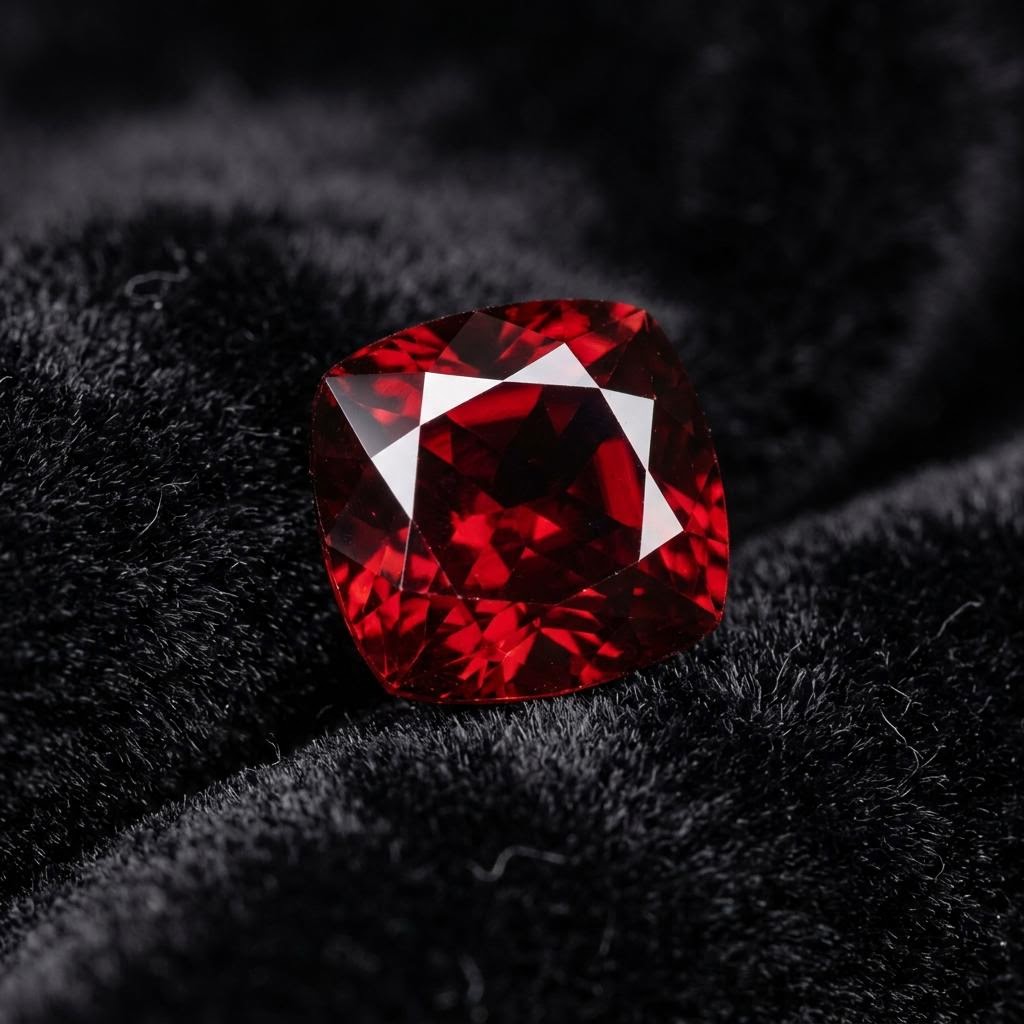
A practical field note on what Garnet is made of, how it forms, how light behaves inside it, and what professionals look for when identifying it.
Browse the plain-language gemstone glossary or learn how to read a lab report.
Representative source regions, not a map of every occurrence.
Produces almandine and other garnet varieties.
Important source of tsavorite, rhodolite, and color-change garnet.
Known for vivid red and orange garnets.
Long history of alluvial garnet production.
New York and Arizona produce notable garnet material.
Color is shaped by chemistry, structure, inclusions, and light. These are representative varieties—not a promise that every stone will show every shade.
Deep pure red typical of magnesium-rich pyrope.
A pinkish-purple trade variety between pyrope and almandine.
Bright orange to mandarin tones from manganese.
Green grossular colored mainly by vanadium or chromium.
Green andradite prized for dispersion and horsetail inclusions.
Some garnets shift from blue-green or teal in daylight to red-purple in warm light.
Gemstones have rich symbolic histories. The claims below are presented as folklore, cultural tradition, or modern pseudoscience—not as proven medical, psychological, or supernatural effects.
Historical lens
The deep red glow and durable crystal made garnet a natural symbol of fire and safe passage.
Historical lens
These meanings belong to historical lapidary literature, not medical science.
Historical lens
Color symbolism can be expressive, but a garnet's color does not create a therapeutic action.
Gemological properties can be measured and tested. Symbolic meaning is personal and cultural; crystals should never replace qualified medical or mental-health care.
Egyptian pharaohs wore necklaces studded with red garnets. Plato supposedly had his portrait engraved on a garnet.
Red pyrope garnets were heavily traded in the Middle Ages. Crusaders brought them back from their journeys, believing they offered protection from wounds.
Bohemian garnet jewelry (clusters of small, dark red pyrope garnets set closely together) became wildly popular. The Pyrope Hair Comb in the National Museum of Prague is a famous example.
Garnet is historically the gem of travelers, given to departing friends as a wish for a safe return. In many ancient cultures, its red color linked it symbolically with blood and the heart; historical lapidaries also attributed health effects to it, though those claims are not supported by modern medicine.
Cultural meanings and historical beliefs are included for context. They are not scientific evidence or medical advice.
Legend says that Noah used a finely cut, glowing garnet to illuminate the Ark during the dark, stormy days of the flood. In Greek mythology, a pomegranate (which shares its name root with garnet) was the symbol of Persephone's safe return to the upper world.
This section records cultural history and folklore. These stories are not scientific evidence or medical guidance.
Garnet is an umbrella term for several distinct minerals. Tsavorite (vivid green) and Demantoid (green with high dispersion/fire) are the rarest and most expensive. Rhodolite (purplish-red) and Spessartine (vivid orange, often called 'Mandarin') are highly prized. Almandine/Pyrope (classic dark red) are abundant and affordable. Garnets are rarely treated, which is a major selling point for natural gem collectors.
Browse our current, authentic collection of natural garnets on eBay.