Myanmar
Mogok produces fine red, pink, blue, and violet spinel.
Semi-Precious gemstone profile
A Brilliant Gem Often Mistaken for Ruby
Spinel is a durable cubic oxide that occurs in vivid red, pink, orange, blue, purple, and black. Fine red spinel was historically identified as ruby in several famous jewels.
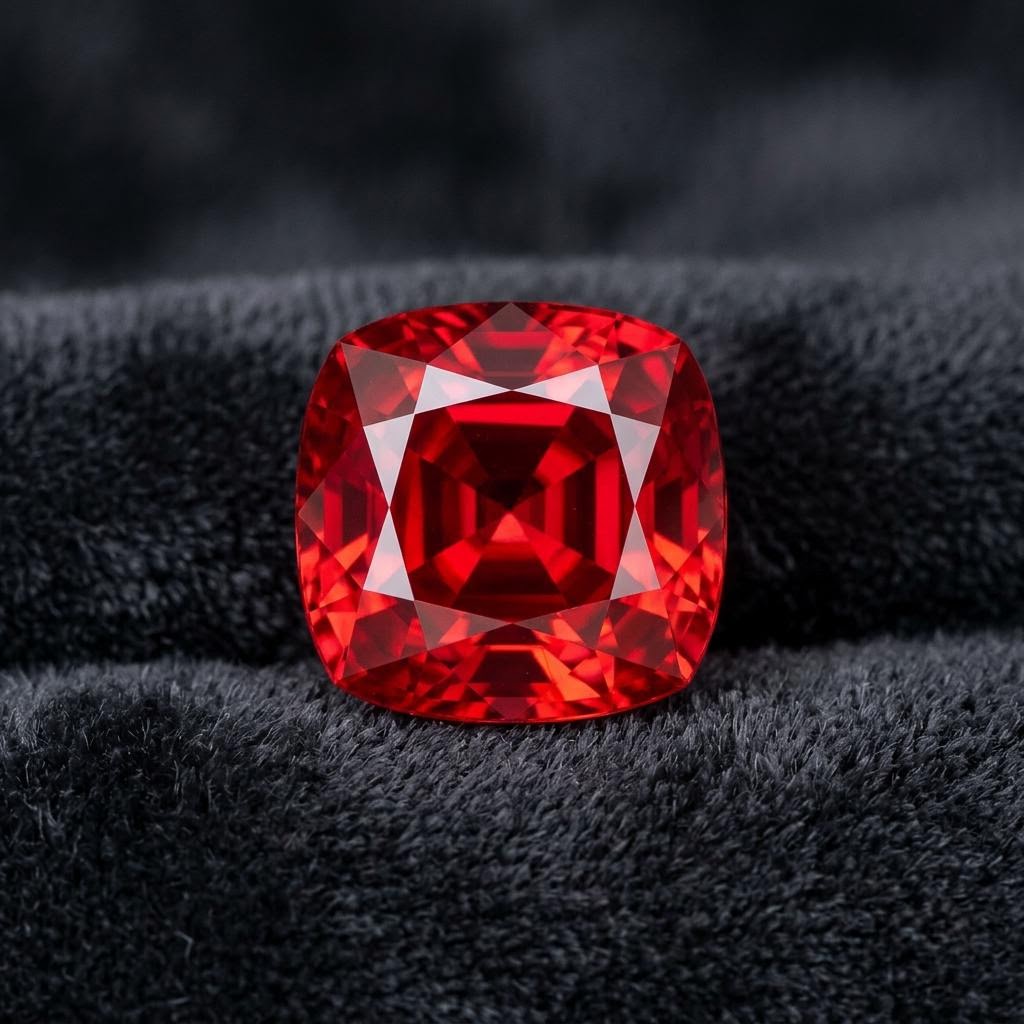
A practical field note on what Spinel is made of, how it forms, how light behaves inside it, and what professionals look for when identifying it.
Browse the plain-language gemstone glossary or learn how to read a lab report.
Representative source regions, not a map of every occurrence.
Mogok produces fine red, pink, blue, and violet spinel.
Mahenge is known for vivid red, hot pink, and orange spinel.
Luc Yen yields vivid red and cobalt-blue collector stones.
Color is shaped by chemistry, structure, inclusions, and light. These are representative varieties—not a promise that every stone will show every shade.
Chromium-bearing red spinel historically mistaken for ruby.
Manganese and chromium can produce saturated pink to red-pink tones.
Rare blue spinel with intense color linked to cobalt in some deposits.
Warm orange or orangy-red spinel is often called flame spinel in trade.
Gemstones have rich symbolic histories. The claims below are presented as folklore, cultural tradition, or modern pseudoscience—not as proven medical, psychological, or supernatural effects.
Historical lens
Many famous 'rubies' in crowns were later identified as spinel.
Historical lens
These are contemporary symbolic meanings, not effects established by gemological testing.
Gemological properties can be measured and tested. Symbolic meaning is personal and cultural; crystals should never replace qualified medical or mental-health care.
Spinel traveled through the same historic gem routes as ruby and sapphire. Modern testing separated it from corundum and helped restore recognition to a gem long hidden behind the ruby name.
Red spinel has been connected with vitality, courage, and royal power through its long history in crowns and regalia. These associations are cultural or spiritual traditions, not scientifically demonstrated effects.
Cultural meanings and historical beliefs are included for context. They are not scientific evidence or medical advice.
Folklore and modern spiritual practices attach symbolic meanings to Spinel. Those beliefs are presented as cultural history, not as medical guidance or evidence of physical effects.
This section records cultural history and folklore. These stories are not scientific evidence or medical guidance.
Evaluate color saturation, clarity, and cut, then confirm identity with a laboratory report for valuable stones. Untreated vivid red and cobalt-blue spinels are particularly sought after.
Browse our current, authentic collection of natural spinels on eBay.