Western Australia
Nickel-rich serpentine environments produce important chrysoprase.
Semi-Precious gemstone profile
Nickel-Colored Apple-Green Chalcedony
Chrysoprase is a translucent green variety of chalcedony colored by nickel. Its even apple-green appearance can fade if stored in intense heat or direct light for long periods.
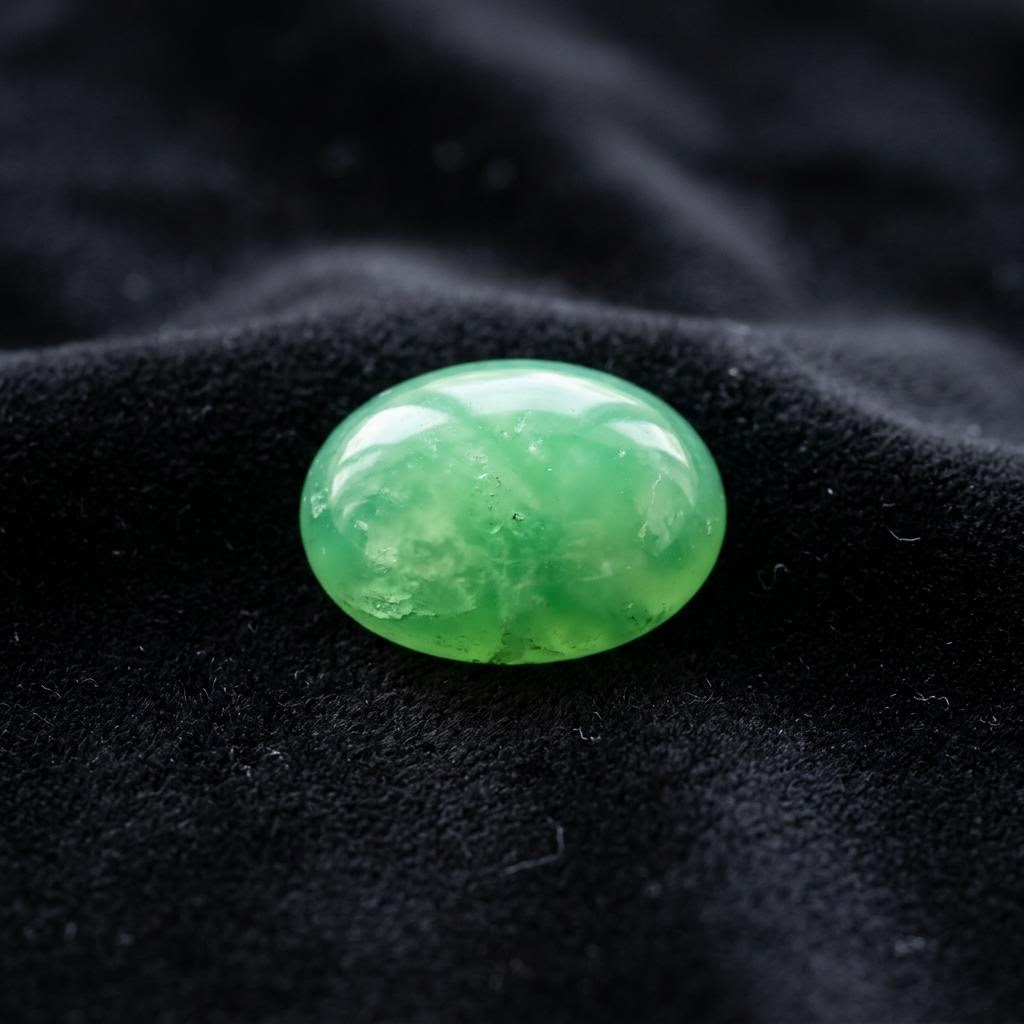
A practical field note on what Chrysoprase is made of, how it forms, how light behaves inside it, and what professionals look for when identifying it.
Browse the plain-language gemstone glossary or learn how to read a lab report.
Representative source regions, not a map of every occurrence.
Nickel-rich serpentine environments produce important chrysoprase.
Historic deposits supplied European decorative stone.
Modern source of green chalcedony and chrysoprase.
Color is shaped by chemistry, structure, inclusions, and light. These are representative varieties—not a promise that every stone will show every shade.
Classic translucent green colored by nickel-bearing inclusions.
Paler bodycolor with a soft, milky translucency.
Higher color concentration creates richer green, though excessive opacity may reduce value.
Gemstones have rich symbolic histories. The claims below are presented as folklore, cultural tradition, or modern pseudoscience—not as proven medical, psychological, or supernatural effects.
Historical lens
The associations arise from its spring-green color and smooth carved surfaces.
Historical lens
It may be meaningful as a personal symbol, but it does not provide mental-health treatment.
Gemological properties can be measured and tested. Symbolic meaning is personal and cultural; crystals should never replace qualified medical or mental-health care.
Chrysoprase was used in ancient carved objects and became especially fashionable in eighteenth-century European jewelry. Australian deposits renewed interest in the material during the twentieth century.
Its green color has supported historical and modern associations with renewal, prosperity, and the natural world. These associations are cultural or spiritual traditions, not scientifically demonstrated effects.
Cultural meanings and historical beliefs are included for context. They are not scientific evidence or medical advice.
Folklore and modern spiritual practices attach symbolic meanings to Chrysoprase. Those beliefs are presented as cultural history, not as medical guidance or evidence of physical effects.
This section records cultural history and folklore. These stories are not scientific evidence or medical guidance.
Look for even natural color and attractive translucency. Ask about dyeing or impregnation, keep the stone away from harsh chemicals and prolonged heat, and use a soft cloth for cleaning.
Browse our current, authentic collection of natural chrysoprases on eBay.