Madagascar
Important source of vivid blue-green and neon apatite.
Semi-Precious gemstone profile
A Brightly Colored Gem With a Soft Side
Apatite is a group of phosphate minerals that can produce vivid neon blue-green, yellow, green, and purple transparent gems. It is softer than most jewelry stones and is best used in protected settings.
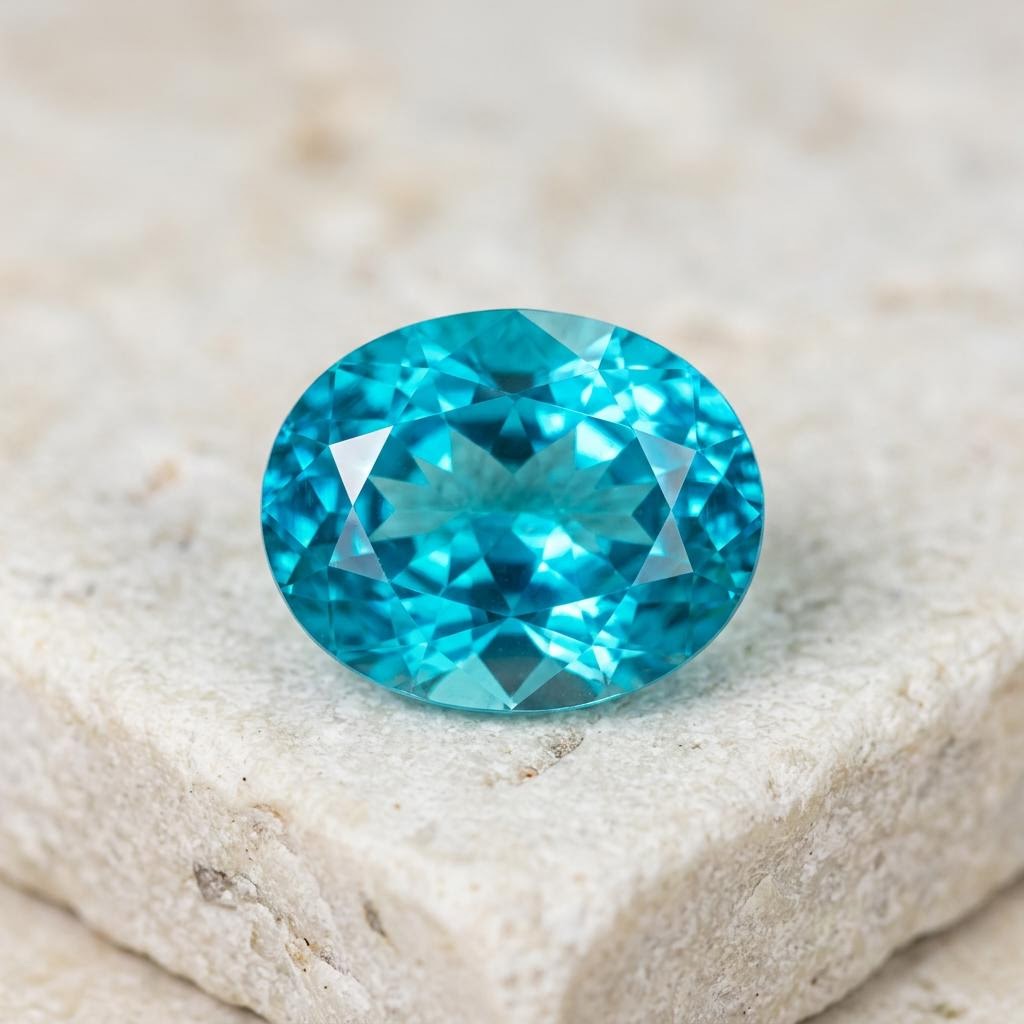
A practical field note on what Apatite is made of, how it forms, how light behaves inside it, and what professionals look for when identifying it.
Browse the plain-language gemstone glossary or learn how to read a lab report.
Representative source regions, not a map of every occurrence.
Important source of vivid blue-green and neon apatite.
Produces blue, yellow, and green transparent material.
Known for yellow and green apatite occurrences.
Color is shaped by chemistry, structure, inclusions, and light. These are representative varieties—not a promise that every stone will show every shade.
Highly saturated color, especially associated with Madagascar material.
Iron, manganese, and other substitutions influence blue apatite.
Bright yellow material can be transparent and strongly lustrous.
Common color range with a softer, natural appearance.
Gemstones have rich symbolic histories. The claims below are presented as folklore, cultural tradition, or modern pseudoscience—not as proven medical, psychological, or supernatural effects.
Historical lens
This is a linguistic and mineralogical history, not a supernatural property.
Historical lens
Those meanings are spiritual symbolism and do not show that apatite changes thought or health.
Gemological properties can be measured and tested. Symbolic meaning is personal and cultural; crystals should never replace qualified medical or mental-health care.
Apatite's name comes from the Greek word for deception because its many colors and forms caused confusion with other minerals. Transparent material is a collector favorite, especially from Madagascar.
Modern spiritual traditions sometimes connect apatite's ocean colors with communication and inspiration; these are symbolic associations rather than proven effects. These associations are cultural or spiritual traditions, not scientifically demonstrated effects.
Cultural meanings and historical beliefs are included for context. They are not scientific evidence or medical advice.
Folklore and modern spiritual practices attach symbolic meanings to Apatite. Those beliefs are presented as cultural history, not as medical guidance or evidence of physical effects.
This section records cultural history and folklore. These stories are not scientific evidence or medical guidance.
Choose earrings, pendants, or occasional-wear rings rather than a daily-wear ring. Clean gently with mild soapy water, avoid ultrasonic or steam cleaners, and expect some stones to show heat treatment.
Browse our current, authentic collection of natural apatites on eBay.