Russia
Historic Ural source that gave alexandrite its name and prestige.
Precious Gems gemstone profile
Nature's Most Astonishing Color Change
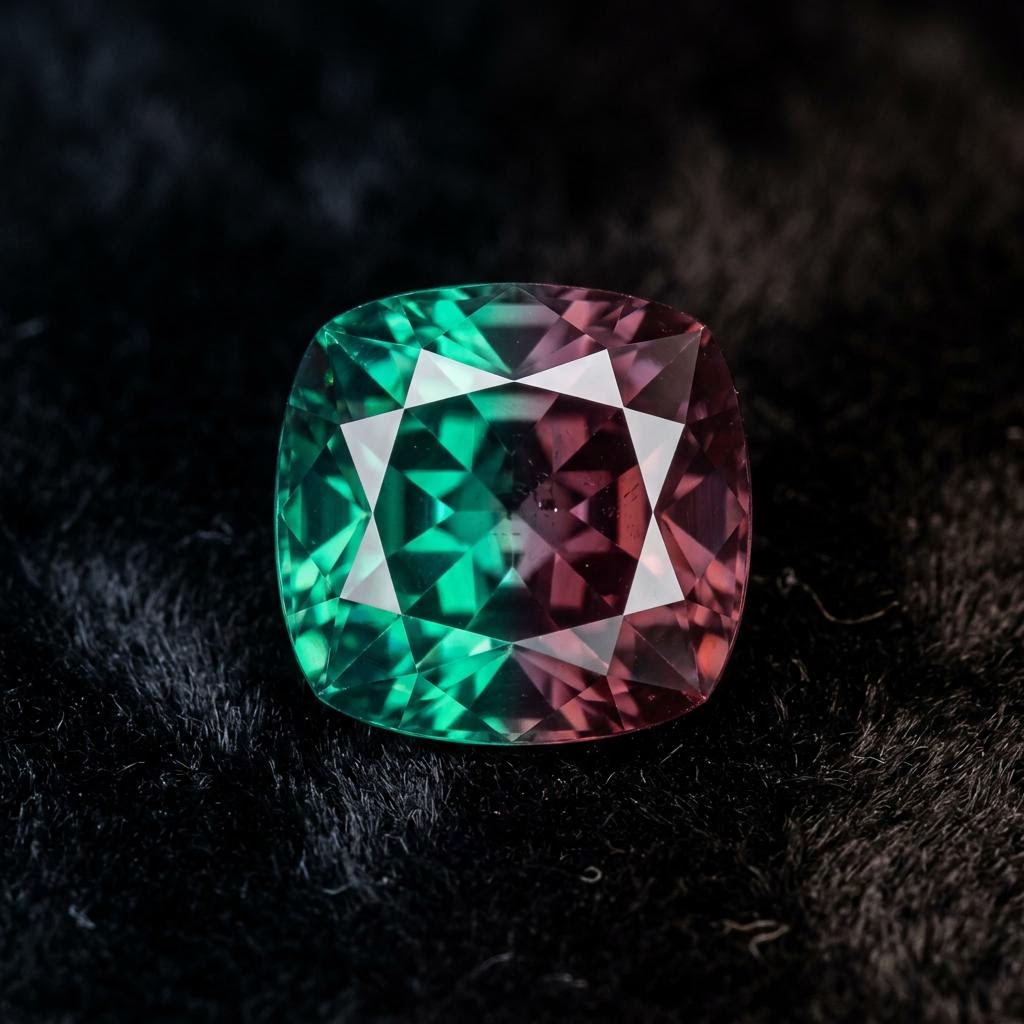
Alexandrite is the chameleon of the gem world—vivid green in daylight, dramatic red or purple-red under incandescent light. This color change, caused by chromium in chrysoberyl, is so remarkable that gemologists describe fine specimens as 'emerald by day, ruby by night.'
A practical field note on what Alexandrite is made of, how it forms, how light behaves inside it, and what professionals look for when identifying it.
Browse the plain-language gemstone glossary or learn how to read a lab report.
Representative source regions, not a map of every occurrence.
Historic Ural source that gave alexandrite its name and prestige.
Produces larger stones, often with less dramatic color change.
Hematita and Bahia regions produce notable alexandrite.
Modern source with green-to-red material.
Small occurrences contribute occasional collector stones.
Color is shaped by chemistry, structure, inclusions, and light. These are representative varieties—not a promise that every stone will show every shade.
The classic daylight-to-incandescent color change caused by chromium absorption.
Strong color change is rare and especially valued.
A cooler daylight appearance can shift to a wine tone.
Lower saturation or different light sources can produce a softer change.
Gemstones have rich symbolic histories. The claims below are presented as folklore, cultural tradition, or modern pseudoscience—not as proven medical, psychological, or supernatural effects.
Historical lens
The symbolism grew from its optical behavior and its association with imperial Russia.
Historical lens
These are contemporary spiritual interpretations, not effects established by optical science.
Gemological properties can be measured and tested. Symbolic meaning is personal and cultural; crystals should never replace qualified medical or mental-health care.
Alexandrite was discovered in the Ural Mountains of Russia on April 17, 1834—the birthday of Tsar Alexander II, for whom it was named. The gem perfectly displayed Russian imperial colors (green and red), making it the national gem of Russia almost instantly.
Russian nobility treasured alexandrite with near-religious devotion. Fabergé used alexandrite extensively in Imperial Easter Eggs and fine jewelry. Alexandrite was believed to bring good luck and was worn by military officers for protection.
After the Russian deposit was largely exhausted by the early 20th century, Sri Lankan and Brazilian alexandrite emerged, though typically showing softer color change than Russian specimens. Fine Russian alexandrite today sells for $50,000–$150,000+ per carat.
Alexandrite has long been a symbol of Russian national pride due to its matching colors with the Imperial Russian flag. In the modern era, it represents balance and adaptability because of its distinct color-shifting abilities. Crystal healers believe alexandrite fosters creativity, imagination, and intuition while providing a connection between the physical and spiritual worlds.
Cultural meanings and historical beliefs are included for context. They are not scientific evidence or medical advice.
Because it was discovered relatively recently compared to ancient gems like ruby or emerald, alexandrite lacks ancient mythology. However, almost immediately upon discovery, legends sprang up in Russia that the stone possessed magical powers to align the physical body with spiritual realms and that it would bring good fortune to anyone pure of heart.
This section records cultural history and folklore. These stories are not scientific evidence or medical guidance.
The strength and quality of the color change is the primary value driver—the best specimens show 100% color change from pure green to pure red. Examine stones under both fluorescent daylight and incandescent (warm) light sources. Russian alexandrites with strong color change are museum-quality rarities; even a 0.5 ct Russian stone with strong change can fetch $5,000–$15,000. Brazilian and Sri Lankan stones are significantly more available. Beware of synthetic alexandrite (Chatham or pulled-crystal) which shows color change but has different refractive indices—lab testing distinguishes them.
Browse our current, authentic collection of natural alexandrites on eBay.