Identification Methods
Learn how professionals identify gemstones, why visual observation is rarely enough, and how to decide when laboratory testing is required.
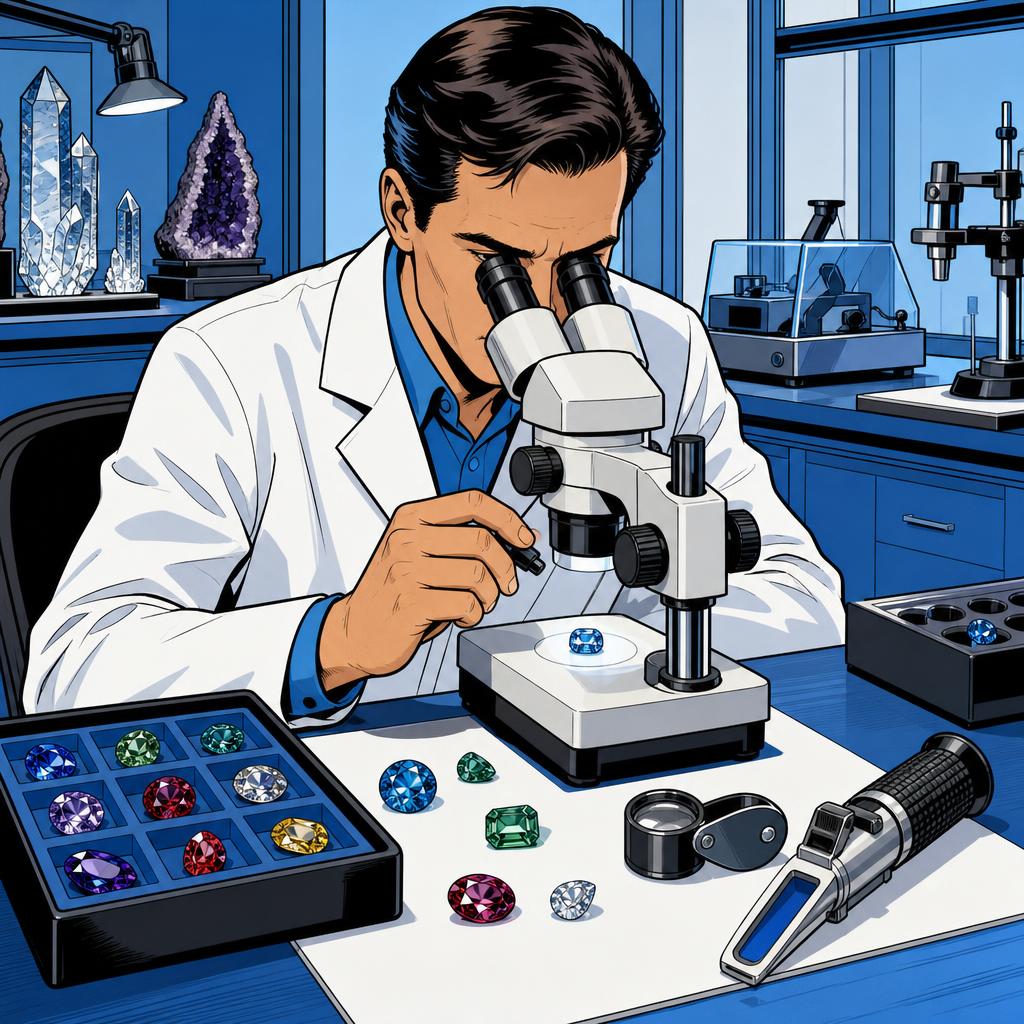
Observation is not authentication
Color, sparkle, magnified features, fluorescence, and optical effects can help document a stone, but no photograph, quiz, scratch test, or single inclusion proves identity, natural origin, treatment status, or geographic origin.
How trained professionals build evidence
- Refractometer: measures refractive index when the material and mounting permit.
- Polariscope and dichroscope: examine optical behavior.
- Microscope: records internal and surface features that must be interpreted with other evidence.
- Spectroscopy, fluorescence, chemistry, and advanced laboratory methods: selected when standard observations do not resolve the question.
Mounted stones, treatments, composite construction, inaccessible surfaces, and overlapping properties can limit conclusions.
Safe escalation path
- Preserve the listing, receipt, photographs, and existing documents.
- Avoid destructive scratch, acid, heat, or home-cleaning tests.
- Ask an independent qualified gemologist which question can be answered and whether the stone must be unmounted.
- Use an appropriate laboratory when treatment, natural/laboratory-grown status, or geographic-origin analysis is material to the decision.