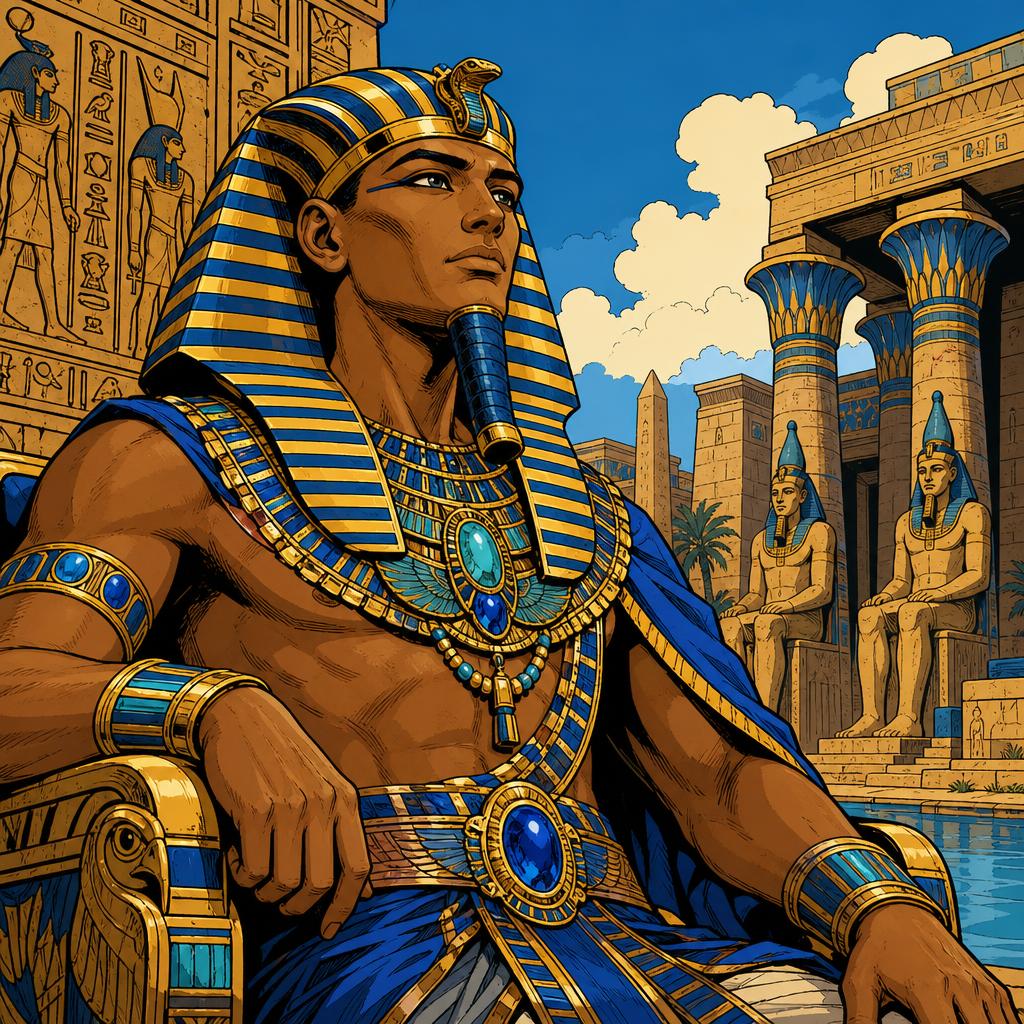
The Ancient World
In Egypt, Mesopotamia, and the Indus Valley, gems were not merely decorative. Lapis lazuli from Afghanistan was traded 4,000 years ago, while Cleopatra claimed Egypt's emerald mines.
Trace the role of gemstones through civilizations, trade routes, royal collections, religious traditions, and modern culture.
Long before currency or written language, people dug in the earth for shiny, hard, colorful rocks. The pursuit of rare minerals funded empires, inspired religions, and drove global exploration.
In Egypt, Mesopotamia, and the Indus Valley, gems were not merely decorative. Lapis lazuli from Afghanistan was traded 4,000 years ago, while Cleopatra claimed Egypt's emerald mines.
Islamic scholars advanced gem cutting and grading while European monarchs defined divine right through crown jewels, cardinal rings, sapphires, and amethysts.
The conquest of the Americas brought Colombian emeralds to Europe, while Mughal emperors amassed and engraved extraordinary rubies and diamonds.
7000 BCE
Rose quartz facial masks used in Egypt; earliest decorative gem use discovered by archaeologists.
4000 BCE
Egyptians mining turquoise in the Sinai Peninsula; lapis lazuli trade route established connecting Afghanistan to Mesopotamia.
3000 BCE
Elaborate Sumerian gold and lapis lazuli jewelry crafted, discovered in the Royal Tombs of Ur.
1500 BCE
Cleopatra's emerald mines open at Wadi Sikait in Egypt. Egyptian faience (glazed quartz) becomes popular.
400 BCE
The Indian Arthashastra describes an organized, sophisticated diamond and gem trade centered around Golconda.
77 CE
Pliny the Elder writes 'Natural History', compiling the most comprehensive ancient catalog of gemstones and their supposed properties.
1000 CE
Islamic gem trade reaches its peak; the Islamic world becomes the global center of gem cutting knowledge and gemological study.
1330 CE
Medieval Europe establishes Cardinal rings as sapphire; gem-embedded reliquaries and religious artifacts become common.
1456 CE
Lodewyk van Berken invents the diamond-polishing wheel (scaif) in Bruges, changing diamond cutting forever.
1519 CE
Spanish conquistadors arrive in the Americas; vast quantities of fine Colombian emeralds begin flowing to Europe and India.
1600s CE
The Mughal Golden Age in India. Emperors like Shah Jahan develop an obsession with gems, creating elaborate engraved ruby and emerald talismans.
1700s CE
Massive Brazilian gem deposits discovered; amethyst, topaz, and later aquamarine are found in unprecedented abundance.
1834 CE
Alexandrite discovered in the Russian Urals and named for Tsar Alexander II, quickly becoming the national stone of Imperial Russia.
1867 CE
The first South African diamond (the Eureka Diamond) is found, igniting the Kimberley diamond rush and modern commercial diamond mining.
1880 CE
Tiffany & Co. begins aggressively sourcing and marketing colored gemstones, transforming American attitudes toward non-diamond jewelry.
1947 CE
De Beers launches the 'A Diamond is Forever' campaign, arguably the most successful advertising campaign in history, cementing the engagement ring tradition.
1967 CE
Tanzanite is discovered at the foot of Mount Kilimanjaro in Tanzania, remaining the only known source for the gem in the world.
1989 CE
Paraíba tourmaline discovered in Brazil, introducing an unprecedented electric neon blue-green color and becoming the highest per-carat value colored stone of the modern era.
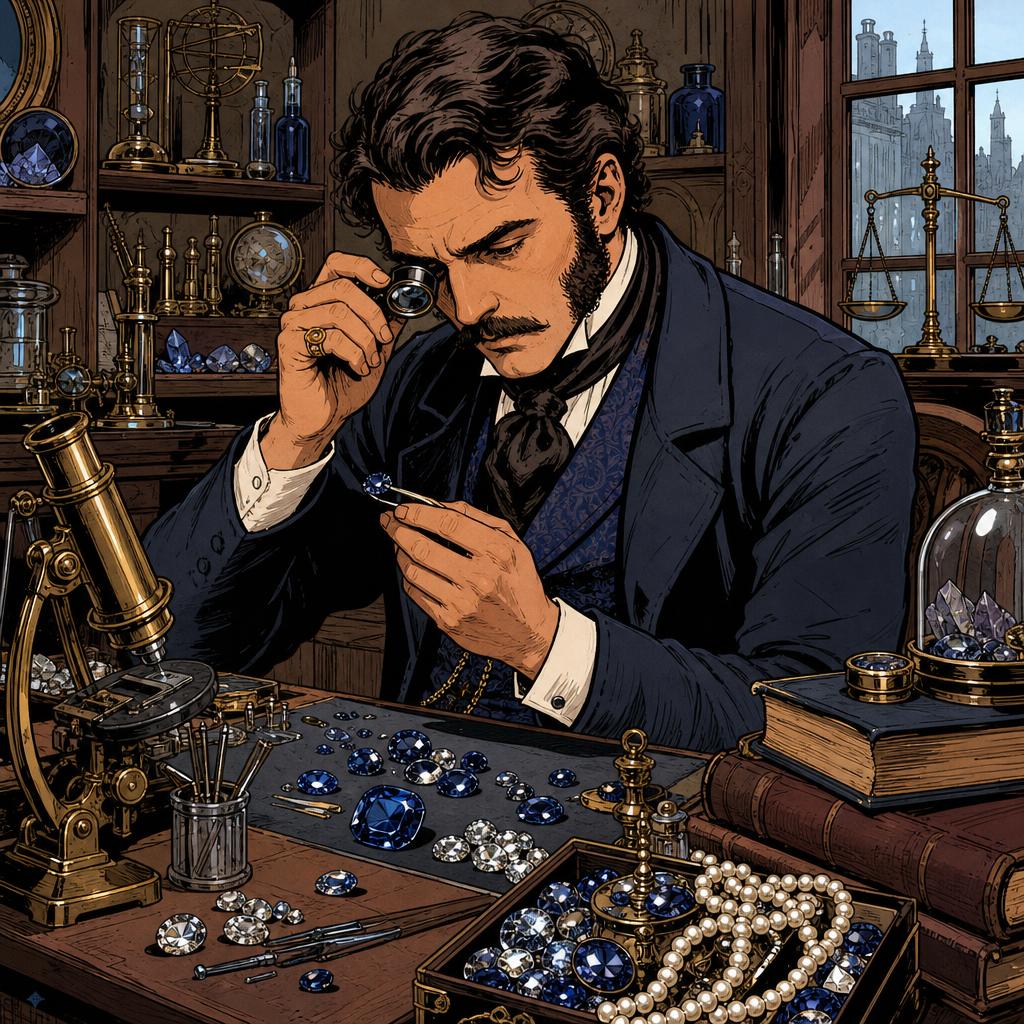
The twentieth century reshaped the relationship with gemstones. Industrial diamond mining and “A Diamond is Forever” cemented the engagement-ring tradition, while tanzanite, Paraíba tourmaline, and laboratory-grown diamonds showed how discovery and science continue to change the market.