South Africa
The principal historic source of tiger's eye and hawk's eye.
Crystals gemstone profile
Chatoyant Quartz in Golden-Brown Bands
Tiger's eye is quartz with a silky moving band of light called chatoyancy. Its golden-brown structure develops through alteration of fibrous precursor minerals.
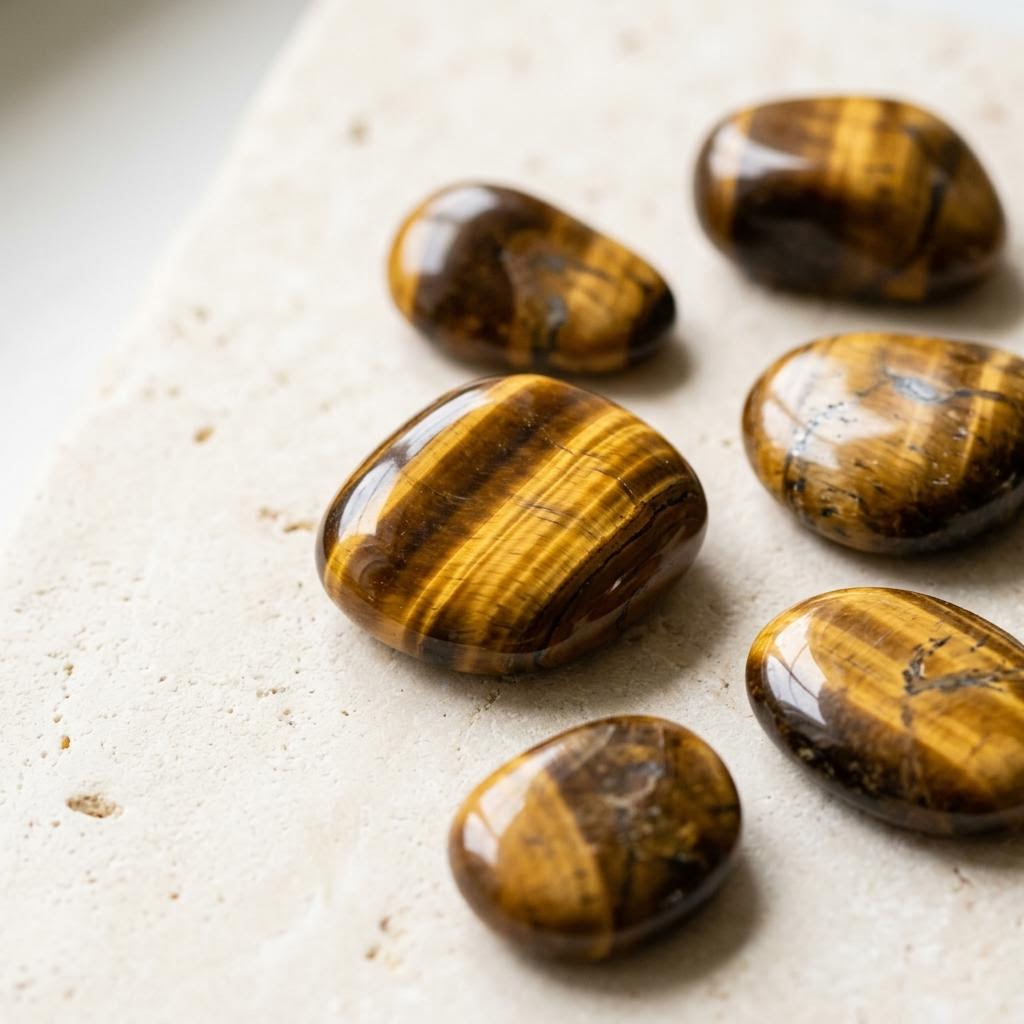
A practical field note on what Tiger's Eye is made of, how it forms, how light behaves inside it, and what professionals look for when identifying it.
Browse the plain-language gemstone glossary or learn how to read a lab report.
Representative source regions, not a map of every occurrence.
The principal historic source of tiger's eye and hawk's eye.
Produces chatoyant quartz with golden and blue tones.
A source of fibrous quartz and related chatoyant material.
Color is shaped by chemistry, structure, inclusions, and light. These are representative varieties—not a promise that every stone will show every shade.
The classic color with a narrow moving band of light.
Lighter fibrous quartz can show bright chatoyancy.
Heat can deepen the iron-rich material toward red.
Less altered blue fibrous material is a related variety.
Gemstones have rich symbolic histories. The claims below are presented as folklore, cultural tradition, or modern pseudoscience—not as proven medical, psychological, or supernatural effects.
Historical lens
The visual effect can suggest an eye without giving the stone perception or agency.
Historical lens
These are symbolic uses, not demonstrated effects on decisions or emotional health.
Gemological properties can be measured and tested. Symbolic meaning is personal and cultural; crystals should never replace qualified medical or mental-health care.
Tiger's eye became widely available after large South African deposits entered international trade in the 19th century.
Its eye-like moving band has inspired protective symbolism and modern associations with confidence and discernment. These associations are cultural or spiritual traditions, not scientifically demonstrated effects.
Cultural meanings and historical beliefs are included for context. They are not scientific evidence or medical advice.
Modern crystal traditions include symbolic meanings for Tiger's Eye. These beliefs are presented as folklore and spiritual practice, not as medical guidance or evidence of physical effects.
This section records cultural history and folklore. These stories are not scientific evidence or medical guidance.
Turn the stone under a single light and look for a sharp, mobile eye. Blue hawk's eye and heat-treated red material are related trade varieties.
Browse our current, authentic collection of natural tiger's eyes on eBay.