Badakhshan, Afghanistan
The historic source of deep blue lapis and ultramarine pigment.
Crystals gemstone profile
Historic Blue Rock Rich in Lazurite
Lapis lazuli is a rock rather than a single crystal, prized for intense blue lazurite with white calcite and metallic pyrite inclusions.
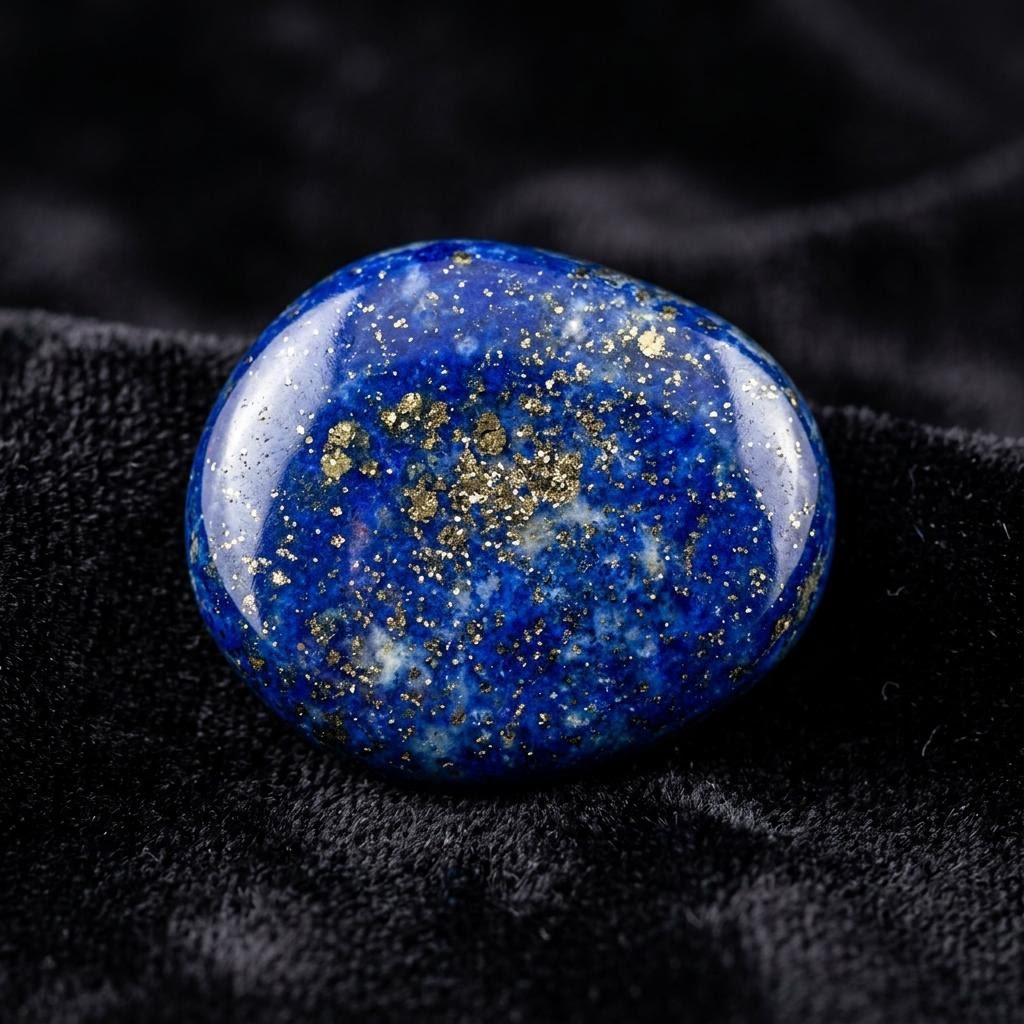
A practical field note on what Lapis Lazuli is made of, how it forms, how light behaves inside it, and what professionals look for when identifying it.
Browse the plain-language gemstone glossary or learn how to read a lab report.
Representative source regions, not a map of every occurrence.
The historic source of deep blue lapis and ultramarine pigment.
Produces blue lapis with distinctive white calcite patterning.
Baikal-region deposits provide decorative lapis material.
Color is shaped by chemistry, structure, inclusions, and light. These are representative varieties—not a promise that every stone will show every shade.
Rich blue lazurite with minimal visible calcite.
A cooler purple cast can occur in fine material.
Brassy pyrite flecks contrast with the blue rock.
White calcite veins or patches are natural features of the rock.
Gemstones have rich symbolic histories. The claims below are presented as folklore, cultural tradition, or modern pseudoscience—not as proven medical, psychological, or supernatural effects.
Historical lens
Its rarity and imported origin made it a marker of status and ritual importance.
Historical lens
These are cultural meanings, not evidence that lapis changes speech, honesty, or health.
Gemological properties can be measured and tested. Symbolic meaning is personal and cultural; crystals should never replace qualified medical or mental-health care.
Mined in Afghanistan for thousands of years, lapis supplied ancient jewelry and the pigment ultramarine used in treasured manuscripts and paintings.
Across several historical cultures, lapis represented status, the night sky, wisdom, or sacred authority. These associations are cultural or spiritual traditions, not scientifically demonstrated effects.
Cultural meanings and historical beliefs are included for context. They are not scientific evidence or medical advice.
Modern crystal traditions include symbolic meanings for Lapis Lazuli. These beliefs are presented as folklore and spiritual practice, not as medical guidance or evidence of physical effects.
This section records cultural history and folklore. These stories are not scientific evidence or medical guidance.
Seek strong, even blue according to preference. Dyeing and resin impregnation are common treatments, so ask for disclosure and avoid chemical cleaners.
Browse our current, authentic collection of natural lapis lazulis on eBay.