India
Longstanding source of orange and red chalcedony used in carving.
Crystals gemstone profile
Orange-Red Chalcedony With Ancient History
Carnelian is translucent orange-to-red chalcedony, a microcrystalline variety of quartz. Iron oxides produce its warm color.
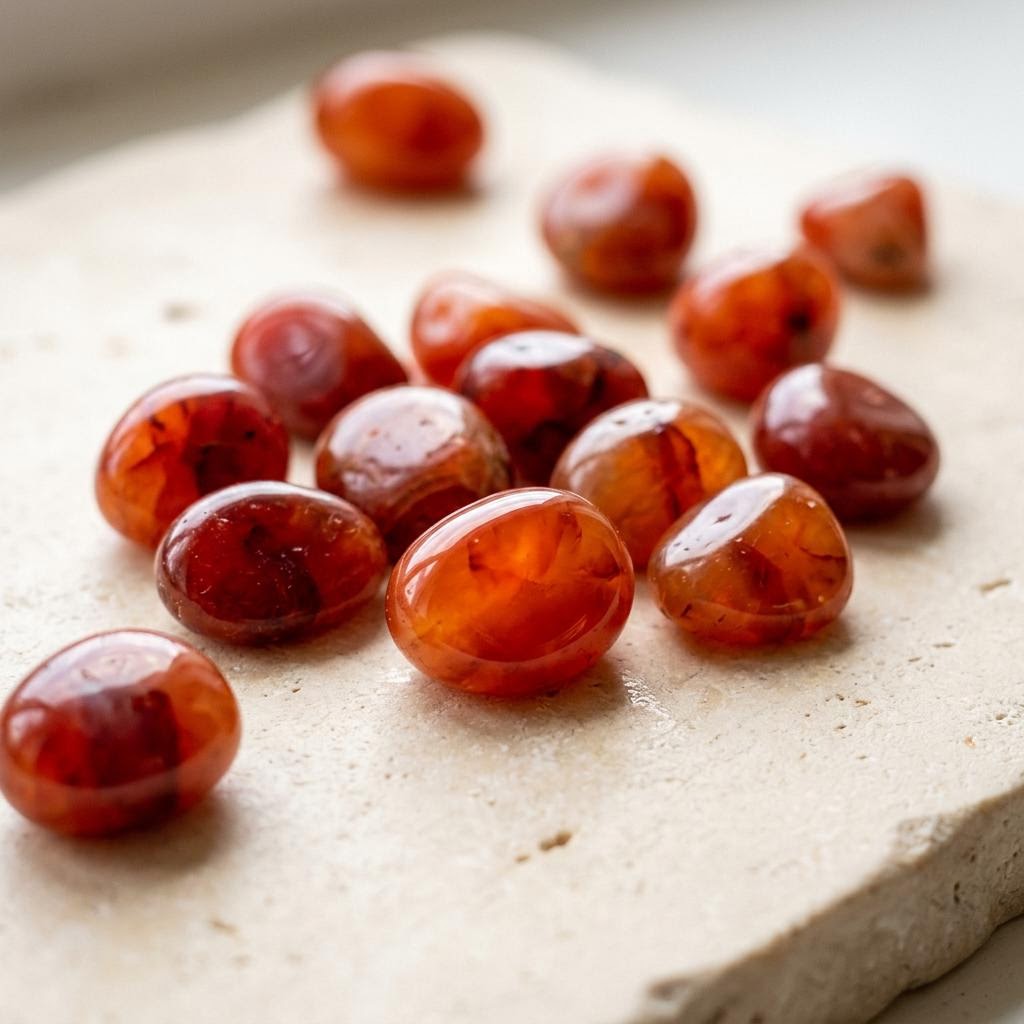
A practical field note on what Carnelian is made of, how it forms, how light behaves inside it, and what professionals look for when identifying it.
Browse the plain-language gemstone glossary or learn how to read a lab report.
Representative source regions, not a map of every occurrence.
Longstanding source of orange and red chalcedony used in carving.
Produces translucent orange and red material.
Source of patterned and warm-colored chalcedony.
Color is shaped by chemistry, structure, inclusions, and light. These are representative varieties—not a promise that every stone will show every shade.
Pale translucent orange colored by dispersed iron.
Classic warm carnelian with even bodycolor.
Higher iron concentration creates darker red-brown tones.
Subtle chalcedony layers can produce bands or clouded color.
Gemstones have rich symbolic histories. The claims below are presented as folklore, cultural tradition, or modern pseudoscience—not as proven medical, psychological, or supernatural effects.
Historical lens
Its warm color and ability to take a fine polish made it a popular seal and talisman material.
Historical lens
These are symbolic beliefs, not measurable effects on energy, motivation, or health.
Gemological properties can be measured and tested. Symbolic meaning is personal and cultural; crystals should never replace qualified medical or mental-health care.
Carnelian was widely carved into seals and beads in ancient Egypt, Mesopotamia, Rome, and the Indus Valley because wax would not readily stick to it.
Historical amulets and modern spiritual practices use carnelian as a symbol of courage, vitality, and creative action. These associations are cultural or spiritual traditions, not scientifically demonstrated effects.
Cultural meanings and historical beliefs are included for context. They are not scientific evidence or medical advice.
Modern crystal traditions include symbolic meanings for Carnelian. These beliefs are presented as folklore and spiritual practice, not as medical guidance or evidence of physical effects.
This section records cultural history and folklore. These stories are not scientific evidence or medical guidance.
Examine color in transmitted light and ask whether it has been heated or dyed. Both are common, but attractive natural-looking color should remain even.
Browse our current, authentic collection of natural carnelians on eBay.